When Peter went hacking away with his sword in the Garden of Gethsemane, he cut off the ear of the servant of the high priest. Pastor pointed out that this was not just a humongous injury. This was his EAR.
Apostles are to preach. They are to save people through their words. Hack off the ear and the fellow cannot hear the word of mercy. What Peter did was violent and hurtful, to be sure. But even more, Peter interfered with the man's hearing. When Jesus healed Malchus, it wasn't just fixing an owie. The miraculous healing gave back to Malchus the organ through which he could hear the preaching which saves.
Saturday, October 18, 2014
Wednesday, October 15, 2014
Trusting in Which God?
Remember that part at the end of Narnia, where the Calormene fellow ends up in heaven confused, saying he worshiped Tash and not Aslan?
Yeah, that's bothered me, like, forever.
Today I bumped into an article about a Lutheran gal who converted first to Roman Catholicism, which then [she said] made it easy to convert to Islam. She went on her pilgrimage to Mecca. It's sad to hear the bondage of the rules which must be done to get your brownie-points for making the pilgrimage, and what you can do to get yourself an exemption to some of the particulars while still racking up your brownie-points.
The woman rightly desires a conviction that "God is all I need or will ever need." She says that those who have that trust will never be worried or discouraged. That's quite a lot of pressure to measure up to, emotionally and mentally. But I suppose it's true. IF I had perfect faith in Jesus, I would never be worried or discouraged. But that ain't gonna happen. That's why He loves and forgives sinners -- we can't be confident and perfectly full of trustingness.
What comes after "God is all I need"? Statements like these:
"I realize that this is something I have to work on every day."
And talk about feeling God's presence.
And, "Now that I have experienced this pure connection to God, I want to maintain and grow it. The onus is on me to make the changes necessary to help this happen."
I want to grow this connection with God.
The onus is on me.
What happened to "God is all I need"?
I've heard Christians say, "God is all I need," but then focus on their following, their works, their praying, their feelings, their efforts to grow? Which God are they worshiping? How is it different from the Muslim god?
Yeah, that's bothered me, like, forever.
Today I bumped into an article about a Lutheran gal who converted first to Roman Catholicism, which then [she said] made it easy to convert to Islam. She went on her pilgrimage to Mecca. It's sad to hear the bondage of the rules which must be done to get your brownie-points for making the pilgrimage, and what you can do to get yourself an exemption to some of the particulars while still racking up your brownie-points.
The woman rightly desires a conviction that "God is all I need or will ever need." She says that those who have that trust will never be worried or discouraged. That's quite a lot of pressure to measure up to, emotionally and mentally. But I suppose it's true. IF I had perfect faith in Jesus, I would never be worried or discouraged. But that ain't gonna happen. That's why He loves and forgives sinners -- we can't be confident and perfectly full of trustingness.
What comes after "God is all I need"? Statements like these:
"I realize that this is something I have to work on every day."
And talk about feeling God's presence.
And, "Now that I have experienced this pure connection to God, I want to maintain and grow it. The onus is on me to make the changes necessary to help this happen."
I want to grow this connection with God.
The onus is on me.
What happened to "God is all I need"?
I've heard Christians say, "God is all I need," but then focus on their following, their works, their praying, their feelings, their efforts to grow? Which God are they worshiping? How is it different from the Muslim god?
Tuesday, October 14, 2014
Update
Gary worked on the garage floor, cleaning it, filling in the rotting cement so that it just begins to smooth out a bit, and painting the floor. A few more years of diligent upkeep and we might remedy the pitiful state the floor was in when we bought the house. It looks SO much better already.
Can't seem to get the house cleaned. Garden isn't put to bed either.
Maggie and I keep plugging away at some schoolwork. I haven't gotten her to a second volunteer-job yet, though, which was high on the priority-list for this school year.
I was ill last week. Now that I'm off the antibiotics, I suspect the problem may be returning. I'm trying to do everything I can to fight it. But I suspect my immune system is more compromised than I thought. It may be a long, vitamin-C-filled, achy, garlicky, lazy winter. It's so hard to know when you should plow stolidly ahead and when you should cry "uncle" and just stop and rest.
Everybody thinks I've recovered better than I have. I hate saying "no," especially when I want to assist with the projects that need to be done. I guess I'm faking Adequacy well enough that people expect me to be back to normal.
Three new babies this week for friends. And an engagement. And a friend released from the hospital. So much happy news out there!
Now that sunset is earlier, the huge glass windows at work have become mirror-like at the end of the day. I didn't realize until yesterday how much I'd been avoiding looking in mirrors. So many people have complimented my short haircut. I've been told that it's chic, trendy, cute, becoming, and a bevy of other nice adjectives. Nevertheless, I still don't like it. But that's been okay because I seldom see myself. Now at work, I can't avoid facing up to my super-short haircut.
I started watching the series "Doc Martin." LUVving it! Thanks to Lora for recommending it!
Right now I'm reading a biography of a guy who suffered a brain injury and became a synesthete. For some reason, the book is beginning to creep me out. I can't figure out why, but it really bothers me that he insists there is no such thing as a circle; he sees everything as angles, squares, triangles. He pretty much sees everything as pixelated. And I believe there are circles. It seems theological to me, and I can't pin down why. I'm glad Maggie and I are still enjoying the joy of Anne books, and that I'm still not done with the Mitford books. Katie suggested that I'm spoiled by the lovely books and don't have patience with most of what's available these days. She's right.
One of those serendipitous homeschooling things: Maggie and I have a few different things going for school right now that hit on worldviews and how macro-evolution has affected so much in academia. We keep bumping into the same thing from different perspectives. That probably adds to my impatience with waste-o-time books and movies. There's so much in the world that is good and beautiful -- let's enjoy them instead of [ahem] facing reality.
Signed,
the ostrich
Can't seem to get the house cleaned. Garden isn't put to bed either.
Maggie and I keep plugging away at some schoolwork. I haven't gotten her to a second volunteer-job yet, though, which was high on the priority-list for this school year.
I was ill last week. Now that I'm off the antibiotics, I suspect the problem may be returning. I'm trying to do everything I can to fight it. But I suspect my immune system is more compromised than I thought. It may be a long, vitamin-C-filled, achy, garlicky, lazy winter. It's so hard to know when you should plow stolidly ahead and when you should cry "uncle" and just stop and rest.
Everybody thinks I've recovered better than I have. I hate saying "no," especially when I want to assist with the projects that need to be done. I guess I'm faking Adequacy well enough that people expect me to be back to normal.
Three new babies this week for friends. And an engagement. And a friend released from the hospital. So much happy news out there!
Now that sunset is earlier, the huge glass windows at work have become mirror-like at the end of the day. I didn't realize until yesterday how much I'd been avoiding looking in mirrors. So many people have complimented my short haircut. I've been told that it's chic, trendy, cute, becoming, and a bevy of other nice adjectives. Nevertheless, I still don't like it. But that's been okay because I seldom see myself. Now at work, I can't avoid facing up to my super-short haircut.
I started watching the series "Doc Martin." LUVving it! Thanks to Lora for recommending it!
Right now I'm reading a biography of a guy who suffered a brain injury and became a synesthete. For some reason, the book is beginning to creep me out. I can't figure out why, but it really bothers me that he insists there is no such thing as a circle; he sees everything as angles, squares, triangles. He pretty much sees everything as pixelated. And I believe there are circles. It seems theological to me, and I can't pin down why. I'm glad Maggie and I are still enjoying the joy of Anne books, and that I'm still not done with the Mitford books. Katie suggested that I'm spoiled by the lovely books and don't have patience with most of what's available these days. She's right.
One of those serendipitous homeschooling things: Maggie and I have a few different things going for school right now that hit on worldviews and how macro-evolution has affected so much in academia. We keep bumping into the same thing from different perspectives. That probably adds to my impatience with waste-o-time books and movies. There's so much in the world that is good and beautiful -- let's enjoy them instead of [ahem] facing reality.
Signed,
the ostrich
Sunday, October 12, 2014
Being Glorified
Such a tight link between justification and glorification!
Romans 8: Whom He predestined, these He also called; whom He called, these He also justified; and whom He justified, these He also glorified.
Notice that "glorified" is a past tense verb? It's not just a "some-day" thing; it's a done deal. It's happened. And it happened because we were declared righteousness (aka, "justified").
And what does Simeon sing? "My eyes have seen Thy salvation ... the glory of Thy people Israel." Our glorification is that we have been saved from our sin.
Romans 8: Whom He predestined, these He also called; whom He called, these He also justified; and whom He justified, these He also glorified.
Notice that "glorified" is a past tense verb? It's not just a "some-day" thing; it's a done deal. It's happened. And it happened because we were declared righteousness (aka, "justified").
And what does Simeon sing? "My eyes have seen Thy salvation ... the glory of Thy people Israel." Our glorification is that we have been saved from our sin.
Saturday, October 11, 2014
Wisconsin Homeschoolers
Your PI-1206 report is due on Wednesday (October 15). Fill out the report ONLINE. Do NOT follow the advice of a certain out-of-state homeschool organization which tells you to use a paper form of their own making. Do it online. The online form does NOT request any information that is different from what is required by law, the information we used to report in the olden days of filling out the paperwork by snail-mail.
Failing to file properly (that is, online) includes the possibility of trouble for yourself. But that's small potatoes. More likely, when people insist on filing a non-government paper-form instead of the online form, we're setting ourselves up for legal hassles as a group.
Failing to file properly (that is, online) includes the possibility of trouble for yourself. But that's small potatoes. More likely, when people insist on filing a non-government paper-form instead of the online form, we're setting ourselves up for legal hassles as a group.
Tuesday, October 07, 2014
Reading Lesson
The older kids would play or color or build-with-Legos while I read aloud to them.
The older kids would read books to themselves on their own.
The doctors told us Maggie would never read for fun, for enjoyment. They told us that kids with VCFS learn rudimentary reading skills, but their comprehension is abysmal. Well, phooey on that. Maggie continued to increase in her reading ability. Then, a couple of years ago, she accidentally discovered something that helped even more.
If someone reads aloud ... and the listener has her own copy of the book -- two things happen.
a) The listener's reading skill increases. ("Oh, that's how you pronounce that word!" Also, a better understanding of how words are grouped into phrases. And much more.)
b) The listener's comprehension of what is heard-with-the-ears increases because of what is seen-with-the-eyes.
Now we're to the point that Maggie always wants to search out of second copy of Anne or whatever-we're-reading. Hooray for a big library system!
The older kids would read books to themselves on their own.
The doctors told us Maggie would never read for fun, for enjoyment. They told us that kids with VCFS learn rudimentary reading skills, but their comprehension is abysmal. Well, phooey on that. Maggie continued to increase in her reading ability. Then, a couple of years ago, she accidentally discovered something that helped even more.
If someone reads aloud ... and the listener has her own copy of the book -- two things happen.
a) The listener's reading skill increases. ("Oh, that's how you pronounce that word!" Also, a better understanding of how words are grouped into phrases. And much more.)
b) The listener's comprehension of what is heard-with-the-ears increases because of what is seen-with-the-eyes.
Now we're to the point that Maggie always wants to search out of second copy of Anne or whatever-we're-reading. Hooray for a big library system!
Monday, October 06, 2014
He Remembers That We Are Dust
Step on an ant or a beetle. Crunch!
Swat a mosquito, and get blood on your hand.
Swat a fly with force, because it requires some smashing.
But swat a moth?
You barely have to touch it.
It doesn't leave a blood stain on the wall.
It practically turns to dust.
That always amazes me. Moths are so dry. There's nothing to them. They are so easy to do away with. And they're like powder. Like dust.
The Lord remembers that we are dust.
But we don't. We think we've got substance. We think we've got strength. We think we've got lasting-power. We think it takes somethin' big to knock us out.
But we are dust.
And the Lord is gentle with us dry dusties.
Swat a mosquito, and get blood on your hand.
Swat a fly with force, because it requires some smashing.
But swat a moth?
You barely have to touch it.
It doesn't leave a blood stain on the wall.
It practically turns to dust.
That always amazes me. Moths are so dry. There's nothing to them. They are so easy to do away with. And they're like powder. Like dust.
"He knows our frame.
He remembers that we are dust" (Ps 103).
The Lord remembers that we are dust.
But we don't. We think we've got substance. We think we've got strength. We think we've got lasting-power. We think it takes somethin' big to knock us out.
But we are dust.
And the Lord is gentle with us dry dusties.
"As a father pities his children,
so the Lord pities those who fear Him."
Sunday, October 05, 2014
He Remembered the Word of the Lord
Jesus said Peter would deny Him. Peter said, "No way. Ain't gonna happen. I'll stick by You, even if it means prison or dying." That's when Jesus told Peter, "Before the rooster crows, you will deny Me three times" (Luke 22:34).
Hours later, when Peter had --sure enough-- denied Jesus three times, the rooster crowed. And then Peter remembered the word of the Lord (verse 61).
I always thought that verse meant Peter remembered the prediction of his failing.
And only that.
Pastor pointed out in class this week that there was more to the conversation: look back at verse 32. Jesus had also said, "I have prayed for you." That's no small thing, no impotent thing, that Jesus prayed for Peter.
Jesus had also said, "When you have returned to Me." In other words, Peter would indeed be restored. He would be forgiven. He would be brought to repentance and placed back in the office of apostle. "When you have returned to Me."
When Peter "remembered the word of the Lord," there was also a word of faithfulness from Jesus mixed in with the statement of Peter's unfaithfulness. It is God who gives faith, works faith, and sustains faith. "The God of peace Himself will sanctify you wholly and keep your spirit, soul, and body sound and blameless at the coming of our Lord Jesus Christ. He who called you is faithful, and He will do it."
Hours later, when Peter had --sure enough-- denied Jesus three times, the rooster crowed. And then Peter remembered the word of the Lord (verse 61).
I always thought that verse meant Peter remembered the prediction of his failing.
And only that.
Pastor pointed out in class this week that there was more to the conversation: look back at verse 32. Jesus had also said, "I have prayed for you." That's no small thing, no impotent thing, that Jesus prayed for Peter.
Jesus had also said, "When you have returned to Me." In other words, Peter would indeed be restored. He would be forgiven. He would be brought to repentance and placed back in the office of apostle. "When you have returned to Me."
When Peter "remembered the word of the Lord," there was also a word of faithfulness from Jesus mixed in with the statement of Peter's unfaithfulness. It is God who gives faith, works faith, and sustains faith. "The God of peace Himself will sanctify you wholly and keep your spirit, soul, and body sound and blameless at the coming of our Lord Jesus Christ. He who called you is faithful, and He will do it."
Saturday, October 04, 2014
Wit
 A movie about dying of cancer. A professor who is alone, no family, no friends. She agrees to aggressive treatment, for the sake of research, with only a small hope for recovery. An exacting professor who teaches John Donne's poetry. A woman who has little to hang onto other than "Death, Be Not Proud" and her own toughness.
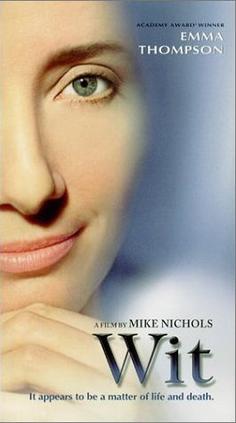 A woman who eventually must face the prospect of her own death. A woman whose only comfort is the gospel (if you can call it that) found in The Runaway Bunny.
So very different from Stephen's death. A man surrounded by family, friends, and pastors. A room filled with hymns, prayers, more hymns, liturgy, psalms, and a few more hymns. An image on the wall of Jesus dying on the cross to bear the wages of Steve's sins. A statue of St Michael defeating the dragon-of-old.
Unlike the tough professor in Wit, Pastor Wiest knew long before that he was weak. But His Jesus is strong. As he became weaker at the end, he was given more and more and more of Jesus' word of forgiveness and mercy. "For when I am weak, then am I strong."
Thursday, October 02, 2014
Library Sorting
When Lora was eliminating Stuff from her house before moving overseas, she talked about her books, and how wrenching it is to get rid of books. So many of us look at bookshelves to get an idea of WHO somebody is. Without our books to identify us, people can't get to know us by perusing our bookshelves.
I'm sorting through Pastor's books, making sure they're properly grouped and arranged after his study was moved into a new room. On the one hand, it's fascinating. Oh oh oh -- so many books just begging to be borrowed! On the other hand, the work feels like trespassing, as if I'm butting into somebody's brain.
Of course, as Katie pointed out, her bookshelves don't necessarily reveal things about her; there are other people in her home. And yet, "Goodnight Moon" does reveal something about who Katie is, even if the book is not her top choice in literature for her own personal reading. Same for Pastor: he has books on his shelves about cults and heresy and other errors, alongside the books that refute error and books that are just fabuloso all on their own.
Paid job;
resting my body while sorting at church;
resting my body while doing schoolwork with Mag;
resting my body while goofing off on the computer;
means
not spending as much time cleaning, cooking, blogging, or gardening as I think I "should." So many many chores that are screaming for attention, and I keep scolding myself into trrrrying to lollygag and watch TV and read more. Healing takes time.
I'm sorting through Pastor's books, making sure they're properly grouped and arranged after his study was moved into a new room. On the one hand, it's fascinating. Oh oh oh -- so many books just begging to be borrowed! On the other hand, the work feels like trespassing, as if I'm butting into somebody's brain.
Of course, as Katie pointed out, her bookshelves don't necessarily reveal things about her; there are other people in her home. And yet, "Goodnight Moon" does reveal something about who Katie is, even if the book is not her top choice in literature for her own personal reading. Same for Pastor: he has books on his shelves about cults and heresy and other errors, alongside the books that refute error and books that are just fabuloso all on their own.
Paid job;
resting my body while sorting at church;
resting my body while doing schoolwork with Mag;
resting my body while goofing off on the computer;
means
not spending as much time cleaning, cooking, blogging, or gardening as I think I "should." So many many chores that are screaming for attention, and I keep scolding myself into trrrrying to lollygag and watch TV and read more. Healing takes time.
Thursday, September 25, 2014
Joy, Suffering, and Philippians 1
In Sunday's epistle (3-yr series) Paul was comforting the saints in Philippi with assurances that his imprisonment was for the sake of the Gospel.
Yes, Paul was an example to the other Christians, so that they were emboldened.
But also, he was writing to the church at Philippi. You remember who was a member of that congregation? The Philippian jailer. The guy who'd listened to Paul and Silas singing hymns half the night. The guy on duty during the earthquake when the Lord opened the prison doors. The guy who was going to kill himself, until Paul stopped him. The guy whose whole family was baptized, who welcomed the apostle into their home and treated his wounds and fed these missionaries. The guy who rejoiced (Acts 16:34) in the Gospel.
You want an idea of why Paul could say that his chains are for the furtherance of the Gospel? And that in his chains, they partake with him of grace? And why that resonated with the folks at the church in Philippi? Because they knew, intellectually, emotionally, experientially. They had lived it. They knew this fellow who worked at the jail. They knew his family. They worshiped with him. They cared about him. And this family heard the good news of Jesus' forgiveness because Paul had been unjustly accused, beaten, and imprisoned. Not fun or comfortable for Paul. But cause for rejoicing nonetheless, because there is greater joy in heaven (and in the church militant too) over one sinner who repents.
And there it was again, in Rome: Paul's arrest being a good thing. (So weird. An unfair arrest being good?!) But if anybody would "get it," it'd be the folks at the Philippian church.
In my chains and in the defense and confirmation of the gospel, you all are partakers with me of grace.
I want you to know, brethren, that the things which happened to me have actually turned out for the furtherance of the gospel, so that it has become evident to the whole palace guard, and to all the rest, that my chains are in Christ; and most of the brethren in the Lord, having become confident by my chains, are much more bold to speak the word without fear.Yes, Paul was acting Christlike, to suffer for preaching the forgiveness of sins to those who are not worthy of it.
Yes, Paul was an example to the other Christians, so that they were emboldened.
But also, he was writing to the church at Philippi. You remember who was a member of that congregation? The Philippian jailer. The guy who'd listened to Paul and Silas singing hymns half the night. The guy on duty during the earthquake when the Lord opened the prison doors. The guy who was going to kill himself, until Paul stopped him. The guy whose whole family was baptized, who welcomed the apostle into their home and treated his wounds and fed these missionaries. The guy who rejoiced (Acts 16:34) in the Gospel.
You want an idea of why Paul could say that his chains are for the furtherance of the Gospel? And that in his chains, they partake with him of grace? And why that resonated with the folks at the church in Philippi? Because they knew, intellectually, emotionally, experientially. They had lived it. They knew this fellow who worked at the jail. They knew his family. They worshiped with him. They cared about him. And this family heard the good news of Jesus' forgiveness because Paul had been unjustly accused, beaten, and imprisoned. Not fun or comfortable for Paul. But cause for rejoicing nonetheless, because there is greater joy in heaven (and in the church militant too) over one sinner who repents.
And there it was again, in Rome: Paul's arrest being a good thing. (So weird. An unfair arrest being good?!) But if anybody would "get it," it'd be the folks at the Philippian church.
Wednesday, September 24, 2014
A Single Red Branch
Winter's coming.
(Shhhh. Did I really say that? Right out loud? [shudder] I should have my mouth washed out with soap.)
Leaves are changing color.
This year, more than other years, I'm noticing how one branch's leaves will turn red or orange, while the rest of the tree's leaves are still green. It's so patchy. And it's not just one or two trees; many are showing the same pattern. It seems odd.
Then I think of people's hair. How my gray hairs all come from the same small patch on my head. How a man's beard will change with one stripe graying before the rest. How some people will turn gray at their temples first.
Maybe those trees are more like us than I thought.
(Shhhh. Did I really say that? Right out loud? [shudder] I should have my mouth washed out with soap.)
Leaves are changing color.
This year, more than other years, I'm noticing how one branch's leaves will turn red or orange, while the rest of the tree's leaves are still green. It's so patchy. And it's not just one or two trees; many are showing the same pattern. It seems odd.
Then I think of people's hair. How my gray hairs all come from the same small patch on my head. How a man's beard will change with one stripe graying before the rest. How some people will turn gray at their temples first.
Maybe those trees are more like us than I thought.
Tuesday, September 23, 2014
Roots and Stability
I like to know what to expect.
I don't like not-knowing -- not-knowing about the economy or safety or politics/military action. It makes it hard to plan for the future. It leaves a person unsettled. We're trying to think about our will right now, and whether to set up a trust for Maggie. But who knows what to expect these days? Health care and taxes and who'll be running the country and whether religious persecution will come to our shores -- it's all up for grabs. No certainty. Questions about stability.
In our Bible story recently (Numbers 6), we heard about the Israelites in the wilderness of Sinai. They'd left Egypt a little more than a year earlier. For a change of pace, we hear that they obeyed the Lord. When the pillar of cloud/fire moved, they were to move. And they did. When the pillar of cloud/fire stayed put, the Israelites were supposed to stay in the same spot. And they did.
But what about their expectations? Any one evening, at the end of the day, when the cloud of the Lord's presence settled, the people pitched their tents and started supper ... with no clue whatsoever as to whether they were going to be packing up again the next morning or in a week. Or in a month. Or in a year. They lived day-to-day with no knowledge of the morrow. No certainty. No stability ...
except ...
"the Lord is my rock and my fortress and my deliverer."
I don't like not-knowing -- not-knowing about the economy or safety or politics/military action. It makes it hard to plan for the future. It leaves a person unsettled. We're trying to think about our will right now, and whether to set up a trust for Maggie. But who knows what to expect these days? Health care and taxes and who'll be running the country and whether religious persecution will come to our shores -- it's all up for grabs. No certainty. Questions about stability.
In our Bible story recently (Numbers 6), we heard about the Israelites in the wilderness of Sinai. They'd left Egypt a little more than a year earlier. For a change of pace, we hear that they obeyed the Lord. When the pillar of cloud/fire moved, they were to move. And they did. When the pillar of cloud/fire stayed put, the Israelites were supposed to stay in the same spot. And they did.
But what about their expectations? Any one evening, at the end of the day, when the cloud of the Lord's presence settled, the people pitched their tents and started supper ... with no clue whatsoever as to whether they were going to be packing up again the next morning or in a week. Or in a month. Or in a year. They lived day-to-day with no knowledge of the morrow. No certainty. No stability ...
except ...
"the Lord is my rock and my fortress and my deliverer."
Saturday, September 20, 2014
Crucifix Shopping
Shhh: don't tell the computer or Big Brother. I have figured out how to get NICE ads in the sidebar of my computer. If you go shopping for a few hours on eShakti, they start sending you gazillions of ads. If you keep clicking on them, pretty soon the ads go away that want you to [ahem] meet singles or buy Bounty or subscribe to some liberal magazine.
Tonight I spent a couple of hours looking for crucifixes. On ebay. On Amazon. On various Catholic church-supply sites. And now I have crosses and pretty dresses popping up as ads. Nice!
While shopping, I discovered how
 few people knew what a crucifix is. There were plenty of empty crosses listed under "crucifix." There were also the kind that some of our kids received as baptism gifts from the congregation -- the kind with a kneeling child in the center.
"I don't like that cross, Mom! I don't want to die on a cross!"
Uh, yeah, that was when those crosses went away.
I also discovered somebody's crafts: turquoise and yellow beads, strung together like we used to make at summer camp to be key chains or lanyards. In a cross-shape. Turquoise and yellow. Ugly as could be. Mixed in with the crucifixes. Good grief. It takes a lot of sifting to shop for something online.
PS: If you need an introductory coupon for eShakti (which also offers free customizing on first-time orders), let me know. You'll get $25-35 off your first try, and I'll get a $10 referral coupon.
Tonight I spent a couple of hours looking for crucifixes. On ebay. On Amazon. On various Catholic church-supply sites. And now I have crosses and pretty dresses popping up as ads. Nice!
While shopping, I discovered how
"I don't like that cross, Mom! I don't want to die on a cross!"
Uh, yeah, that was when those crosses went away.
I also discovered somebody's crafts: turquoise and yellow beads, strung together like we used to make at summer camp to be key chains or lanyards. In a cross-shape. Turquoise and yellow. Ugly as could be. Mixed in with the crucifixes. Good grief. It takes a lot of sifting to shop for something online.
PS: If you need an introductory coupon for eShakti (which also offers free customizing on first-time orders), let me know. You'll get $25-35 off your first try, and I'll get a $10 referral coupon.
Friday, September 19, 2014
Arachnoiditis
When a brain aneurysm ruptures, blood mixes with the cerebrospinal fluid. Your brain doesn't like that. Neither do your nerves. That nice, clean fluid is supposed to protect your nervous system, and blood pollutes it. This can bring on arachnoiditis.
After my little aneurysm problem, I had debilitating pain in my lower back and my legs. Once the doctors figured out the cause of my pain, they knew that the best solution was for the blood to be re-absorbed by the body so that it would be away from the nerves. That meant my getting up to sit and even walk. It also meant lots of pain meds to make it possible for me to sit or stand.
Thinking about how arnica gel had helped so much in healing my bruises (where blood leaked and has to be re-absorbed) I asked my family to bring arnica to the hospital. I can't say for sure that it helped. But I sure felt better when I used it on the sore spots. Of course, the improvement may have been caused by the doctors' treatments, or time, or a combination of many things.
With some recent flare-ups, I'm trying arnica again. I doubt it will help. It doesn't seem reasonable to try, as pain now is residual nerve pain, and not pain from blood currently polluting my CSF. But what would it hurt?
After my little aneurysm problem, I had debilitating pain in my lower back and my legs. Once the doctors figured out the cause of my pain, they knew that the best solution was for the blood to be re-absorbed by the body so that it would be away from the nerves. That meant my getting up to sit and even walk. It also meant lots of pain meds to make it possible for me to sit or stand.
Thinking about how arnica gel had helped so much in healing my bruises (where blood leaked and has to be re-absorbed) I asked my family to bring arnica to the hospital. I can't say for sure that it helped. But I sure felt better when I used it on the sore spots. Of course, the improvement may have been caused by the doctors' treatments, or time, or a combination of many things.
With some recent flare-ups, I'm trying arnica again. I doubt it will help. It doesn't seem reasonable to try, as pain now is residual nerve pain, and not pain from blood currently polluting my CSF. But what would it hurt?
Thursday, September 18, 2014
Is the Ancient Definition of Marriage Bigoted?
"Same-Sex Marriage and Interracial Marriage" was a recent topic on Issues Etc. [Excuse me: why isn't anybody putting quote-marks around that word anymore? A year or two ago, it was same-sex "marriage."]
Two points stuck out. First -- never, in all the world's history, in any culture, was a same-sex union considered to be marriage. Even in cultures that accepted homosexuality as just another option, nobody considered that relationship to be marriage.
Second -- what about the charge that those who oppose same-sex unions are just like the bigots who opposed interracial marriage? The speaker pointed out that that kind of bigotry was never about the essence or definition of marriage. It was always about racial "purity" and guarding whiteness. It was about the hatred that wanted to prevent mixing races. But the argument then was never about what marriage IS. The arguments today are not about who can and can't get married (although some say that it is); the argument today is about what marriage is.
Two points stuck out. First -- never, in all the world's history, in any culture, was a same-sex union considered to be marriage. Even in cultures that accepted homosexuality as just another option, nobody considered that relationship to be marriage.
Second -- what about the charge that those who oppose same-sex unions are just like the bigots who opposed interracial marriage? The speaker pointed out that that kind of bigotry was never about the essence or definition of marriage. It was always about racial "purity" and guarding whiteness. It was about the hatred that wanted to prevent mixing races. But the argument then was never about what marriage IS. The arguments today are not about who can and can't get married (although some say that it is); the argument today is about what marriage is.
Wednesday, September 17, 2014
Music Appreciation
Oh, the grand plans that homeschool moms come up with! And how hard to execute all those lesson plans!
I was intrigued by the program used by our congregation's school. The Brummitt-Taylor Music Listening Program includes 131 music selections. The concept reminds me of the Five-in-a-Row curriculum for little kids: choose something good [be it kiddy-lit or a piece of classical music] and repeat it daily for a week. I've been wanting to develop my own list of music to be used in a similar way:
just a few minutes a day
just listening -- no projects or study
repeated exposure
This is what I've come up with. Our plan at this point is to use each piece for half a month, and not necessarily in the order listed here. I'm including you-tube links, but there are multiple places to find the pieces, online or through purchased CD's. We will not have the script offered with the B-T program, nor their comprehensive list, but I'm telling myself that familiarizing ourselves with some classical pieces is better than nothing. At the rate of 2-3 pieces per month, I've got two years worth of plans here.
Rossini: Barber of Seville -- Figaro's Aria
Britten: Young Person's Guide to the Orchestra (2-minute intro)
(full version)
Vivaldi: Four Seasons -- Summer
Vivaldi: Four Seasons -- Autumn
Vivaldi: Four Seasons -- Winter
Vivaldi: Four Seasons -- Spring
Bach: Air on the G string
Handel: Xerxes -- Largo
Purcell: Trumpet Tune and Air
Charpentier: Prelude in D-major to "Te Deum"
Handel: Water Music Suite #1 -- Air
Handel: Water Music Suite #2 -- Hornpipe
Chopin: Minute Waltz
Rossini: William Tell Overture -- Finale
Mozart: Eine Kleine Nachtmusik, Serenade #13 for strings in G minor
Bizet: Carmen -- Overture
Bach: Jesu, Joy of Man's Desiring
Clarke: Trumpet Voluntary
Copland: Rodeo -- Hoe-down (beef commercial)
Bach: Toccata and Fugue in D minor
Tchaikovsky: 1812 Overture
Beethoven: Fur Elise
Sousa: Stars and Stripes Forever
Liszt: Hungarian Rhapsody
Tom & Jerry's Hungarian Rhapsody
Bach: Wake, Awake
Mendelssohn: Wedding March
Wagner: Wedding Chorus (Here Comes the Bride)
Wagner: Ride of the Valkyries
Gershwin: I Got Rhythm
Mouret: Fanfare Rondeau (Masterpiece Theater theme)
Brahms: Lullaby
Levine: Fanfare for the Common Man
Grieg: Peer Gynt (from Mountain King)
Grieg: In the Hall of the Mountain King (another version)
Offenbach: Can Can Music
Bach: Bouree from Lute Suite -- BWV 996
Debussy: Claire de lune
Schumann: The Merry Peasant
Delibes: Sylvia -- Pizzicato
Shastakovich: The Second Waltz
Albinoni: Adagio in G minor
Tchaikovsky: Swan Lake Ballet
Tchaikovsky: The Nutcracker Suite -- March
Tchaikovsky: The Nutcracker Suite -- Dance of the Sugar Plum Fairy
Tchaikovsky: The Nutcracker Suite -- Waltz of the Flowers
Handel: The Messiah -- For Unto Us a Child Is Born
Handel: The Messiah -- He Shall Feed His Flock
Handel: The Messiah -- He Was Despised
Handel: The Messiah -- I Know That My Redeemer Liveth
Handel: The Messiah -- Hallelujah Chorus
Vivaldi: Double Concerto in D minor for two oboes
Mozart: Symphony #40 in G minor K 550
Mozart: Piano Concerto 21 -- Andante
Pachelbel: Canon in D Major
Mozart: The Magic Flute -- The Bird-Catcher
Beethoven: 9th Symphony, 4th movement
Prokofiev: Peter and the Wolf March
Ravel: Bolero
Mendelssohn: Song Without Words
Dvorak: New World Symphony, part 1, 4th movement
Khan Academy on Dvorak's New World Symphony
Beethoven: 5th Symphony
Khan Academy on Beethoven's 5th Symphony, part 1
Khan Academy on Beethoven's 5th Symphony, part 2
Khan Academy on Beethoven's 5th Symphony, part 3
Haydn: Symphony no. 6, movement 1
Listening guide to Haydn's Symphony #6
Stravinsky: Firebird Suite Finale
Khan Academy on the Firebird Suite
Glenda steered me in the direction of Harmony Fine Arts that could be used to supplement and deepen the simplistic list I've gathered.
Cheryl offered some ideas, as well as pointing out "52 Most Important Classical Works of All Time" which may expand your own list of pieces to include as you learn more about music.
I was intrigued by the program used by our congregation's school. The Brummitt-Taylor Music Listening Program includes 131 music selections. The concept reminds me of the Five-in-a-Row curriculum for little kids: choose something good [be it kiddy-lit or a piece of classical music] and repeat it daily for a week. I've been wanting to develop my own list of music to be used in a similar way:
just a few minutes a day
just listening -- no projects or study
repeated exposure
This is what I've come up with. Our plan at this point is to use each piece for half a month, and not necessarily in the order listed here. I'm including you-tube links, but there are multiple places to find the pieces, online or through purchased CD's. We will not have the script offered with the B-T program, nor their comprehensive list, but I'm telling myself that familiarizing ourselves with some classical pieces is better than nothing. At the rate of 2-3 pieces per month, I've got two years worth of plans here.
Rossini: Barber of Seville -- Figaro's Aria
Britten: Young Person's Guide to the Orchestra (2-minute intro)
(full version)
Vivaldi: Four Seasons -- Summer
Vivaldi: Four Seasons -- Autumn
Vivaldi: Four Seasons -- Winter
Vivaldi: Four Seasons -- Spring
Bach: Air on the G string
Handel: Xerxes -- Largo
Purcell: Trumpet Tune and Air
Charpentier: Prelude in D-major to "Te Deum"
Handel: Water Music Suite #1 -- Air
Handel: Water Music Suite #2 -- Hornpipe
Chopin: Minute Waltz
Rossini: William Tell Overture -- Finale
Mozart: Eine Kleine Nachtmusik, Serenade #13 for strings in G minor
Bizet: Carmen -- Overture
Bach: Jesu, Joy of Man's Desiring
Clarke: Trumpet Voluntary
Copland: Rodeo -- Hoe-down (beef commercial)
Bach: Toccata and Fugue in D minor
Tchaikovsky: 1812 Overture
Beethoven: Fur Elise
Sousa: Stars and Stripes Forever
Liszt: Hungarian Rhapsody
Tom & Jerry's Hungarian Rhapsody
Bach: Wake, Awake
Mendelssohn: Wedding March
Wagner: Wedding Chorus (Here Comes the Bride)
Wagner: Ride of the Valkyries
Gershwin: I Got Rhythm
Mouret: Fanfare Rondeau (Masterpiece Theater theme)
Brahms: Lullaby
Levine: Fanfare for the Common Man
Grieg: Peer Gynt (from Mountain King)
Grieg: In the Hall of the Mountain King (another version)
Offenbach: Can Can Music
Bach: Bouree from Lute Suite -- BWV 996
Debussy: Claire de lune
Schumann: The Merry Peasant
Delibes: Sylvia -- Pizzicato
Shastakovich: The Second Waltz
Albinoni: Adagio in G minor
Tchaikovsky: Swan Lake Ballet
Tchaikovsky: The Nutcracker Suite -- March
Tchaikovsky: The Nutcracker Suite -- Dance of the Sugar Plum Fairy
Tchaikovsky: The Nutcracker Suite -- Waltz of the Flowers
Handel: The Messiah -- For Unto Us a Child Is Born
Handel: The Messiah -- He Shall Feed His Flock
Handel: The Messiah -- He Was Despised
Handel: The Messiah -- I Know That My Redeemer Liveth
Handel: The Messiah -- Hallelujah Chorus
Vivaldi: Double Concerto in D minor for two oboes
Mozart: Symphony #40 in G minor K 550
Mozart: Piano Concerto 21 -- Andante
Pachelbel: Canon in D Major
Mozart: The Magic Flute -- The Bird-Catcher
Beethoven: 9th Symphony, 4th movement
Prokofiev: Peter and the Wolf March
Ravel: Bolero
Mendelssohn: Song Without Words
Dvorak: New World Symphony, part 1, 4th movement
Khan Academy on Dvorak's New World Symphony
Beethoven: 5th Symphony
Khan Academy on Beethoven's 5th Symphony, part 1
Khan Academy on Beethoven's 5th Symphony, part 2
Khan Academy on Beethoven's 5th Symphony, part 3
Haydn: Symphony no. 6, movement 1
Listening guide to Haydn's Symphony #6
Stravinsky: Firebird Suite Finale
Khan Academy on the Firebird Suite
Glenda steered me in the direction of Harmony Fine Arts that could be used to supplement and deepen the simplistic list I've gathered.
Cheryl offered some ideas, as well as pointing out "52 Most Important Classical Works of All Time" which may expand your own list of pieces to include as you learn more about music.
Tuesday, September 16, 2014
Women Soldiers?
Today's Bible story in chapel was the beginning of Numbers, where God told Moses to take a census of the Israelites. Who was to be counted? Not everyone. Only the males over age 20.
Why? They would be the soldiers, the army.
Pastor asked the kids, "But why only the males?"
After a few answers that were partly true, but not quite to the point, Pastor led them to the key point. "It's about Jesus, folks."
Men protect and guard women. The husband lays down his life for his bride. Real men sacrifice for their families instead of thinking first of themselves. This is what Jesus did for His bride the Church. And pointing to this truth about Jesus, God instructed that the Israelite army would be the men.
Why? They would be the soldiers, the army.
Pastor asked the kids, "But why only the males?"
After a few answers that were partly true, but not quite to the point, Pastor led them to the key point. "It's about Jesus, folks."
Men protect and guard women. The husband lays down his life for his bride. Real men sacrifice for their families instead of thinking first of themselves. This is what Jesus did for His bride the Church. And pointing to this truth about Jesus, God instructed that the Israelite army would be the men.
Mind-Boggling Costs
Maybe I should quit reading this book.
Once upon a time, the insurance salesman was pressing upon Gary and me the importance of planning ahead for the children's college educations. We had to put money aside. College is expensive and getting more expensive. We have to prepare when they're little.
We told him that our financial situation didn't allow it. He still pushed. We said we could put money aside for their college, but that would mean not feeding the munchkins. Don't feed a kid for 16-18 years, and ... you know what? You wouldn't have to pay for college because the kid would've starved to death by then.
Seriously, some financial planners don't seem to understand the financial situation some regular folks are in. (Or maybe we weren't regular folks. Maybe we were really very poor ... and merely passing as middle-class.)
So this book I'm reading talks about making a life-plan for your special-needs child. The author makes some great points. But some parts leave me scratching my head. For example: job-coaching. If your kid needs a job-coach, it may cost $1000-2000 for an evaluation and initial help. Then it would probably run you $50/hour. And the job-coach should be alongside the person the whole time he's working for the first several weeks, then weaning off contact slowly over the course of a few months. Do the math: we're talking about an $8000-10,000 pricetag for someone to help a young adult learn job skills at a half-time fast-food job that pays minimum wage. Hey, I think it would be great to provide that opportunity. But who's got that kind of money?
Similarly, the author talks about the importance of living independently. (Now, his version of "living independently" might be in a group-home, or in an apartment with a full-time care-giver. It's just important, says he, that the special-needs person NOT live with parents.) Here too, he makes some good points -- particularly when he says that a child may outlive the parents and will then have to face independent living during a time of mourning and other upheaval. But the price-tag here too is eye-popping. He's talking about $35,000--50,000 per year for room and board. For one person!
Several chapters into the book, I cut to the last page. In the conclusion, the author admits, "It is not easy, and for some, limited by economic circumstances and insolvable constraints, their hopes and dreams for their child may not be possible."
Exactly.
So do I keep reading, in hopes of finding a few helpful tidbits?
Also, I had to laugh at the section where he's talking about how to choose a good financial planner. It's really important that we find someone who can give a good estimate of investment returns because, oh, y'know, regular folks like us can't figure that out very well.
Far as I can see, over the last 10-15 years, no financial planner has done a very good job finding high-returning investments. Loads of people were assured returns of 10%, or even 15-25% annually, and are now getting returns of 1-4%.
So if we can't provide for ourselves, much less continue to provide for our children after our deaths, I guess maybe, just maybe, we'll be reduced [gasp!] to praying, "Give us this day our daily bread." In our home, we haven't gone hungry yet, and objectively there's no way we should still be afloat financially. God has provided. Remember when the Lord Jesus took those five loaves and two fish and fed thousands? Yeah, He still does stuff like that.
Once upon a time, the insurance salesman was pressing upon Gary and me the importance of planning ahead for the children's college educations. We had to put money aside. College is expensive and getting more expensive. We have to prepare when they're little.
We told him that our financial situation didn't allow it. He still pushed. We said we could put money aside for their college, but that would mean not feeding the munchkins. Don't feed a kid for 16-18 years, and ... you know what? You wouldn't have to pay for college because the kid would've starved to death by then.
Seriously, some financial planners don't seem to understand the financial situation some regular folks are in. (Or maybe we weren't regular folks. Maybe we were really very poor ... and merely passing as middle-class.)
So this book I'm reading talks about making a life-plan for your special-needs child. The author makes some great points. But some parts leave me scratching my head. For example: job-coaching. If your kid needs a job-coach, it may cost $1000-2000 for an evaluation and initial help. Then it would probably run you $50/hour. And the job-coach should be alongside the person the whole time he's working for the first several weeks, then weaning off contact slowly over the course of a few months. Do the math: we're talking about an $8000-10,000 pricetag for someone to help a young adult learn job skills at a half-time fast-food job that pays minimum wage. Hey, I think it would be great to provide that opportunity. But who's got that kind of money?
Similarly, the author talks about the importance of living independently. (Now, his version of "living independently" might be in a group-home, or in an apartment with a full-time care-giver. It's just important, says he, that the special-needs person NOT live with parents.) Here too, he makes some good points -- particularly when he says that a child may outlive the parents and will then have to face independent living during a time of mourning and other upheaval. But the price-tag here too is eye-popping. He's talking about $35,000--50,000 per year for room and board. For one person!
Several chapters into the book, I cut to the last page. In the conclusion, the author admits, "It is not easy, and for some, limited by economic circumstances and insolvable constraints, their hopes and dreams for their child may not be possible."
Exactly.
So do I keep reading, in hopes of finding a few helpful tidbits?
Also, I had to laugh at the section where he's talking about how to choose a good financial planner. It's really important that we find someone who can give a good estimate of investment returns because, oh, y'know, regular folks like us can't figure that out very well.
Far as I can see, over the last 10-15 years, no financial planner has done a very good job finding high-returning investments. Loads of people were assured returns of 10%, or even 15-25% annually, and are now getting returns of 1-4%.
So if we can't provide for ourselves, much less continue to provide for our children after our deaths, I guess maybe, just maybe, we'll be reduced [gasp!] to praying, "Give us this day our daily bread." In our home, we haven't gone hungry yet, and objectively there's no way we should still be afloat financially. God has provided. Remember when the Lord Jesus took those five loaves and two fish and fed thousands? Yeah, He still does stuff like that.
Monday, September 15, 2014
Toward the End of Summer
 |
| Now, THIS is the way to do schoolwork! (Although her chair was in the shade, mine was in the sunshine.) |
 | ||
| But, ... but, ... but ... hostas and sedum aren't supposed to be blooming anywhere close to the same time. They should bloom two months apart. This is SOME weird weather. |
PS: In case anyone cares [Cheryl] this is blogpost #4000.
Subscribe to:
Posts (Atom)