Friday, October 16, 2009

Zoo Trip

Okay, so I'm very very slow. Pictures from early August ...


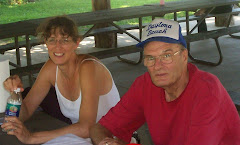
The man with Gary is Randy, one of the bosses at Gary's work, and the guy has done so much to teach Andrew to sing bass! (Andrew was seated next to Randy last year in choir, and it helped him immeasurably just to be able to follow the lead of the strong singer next to him.)


Petting a chicken. (My mom is not jealous of Alia!)


Petting a snake. Now, does James agree with what Pastor said in Bible class a week or two ago, about our natural inclination to be to recoil from snakes?


She liked the baby chicks.


Rainy day. Typical kid -- just as enchanted by the umbrella as she was by the animals.


Tuckered.


All the kids but Nathan made it that day:


Today's Laugh

The company psychiatrist was interviewing Nancy. As she sat in the chair, the psychiatrist asked a series of questions to determine if she was emotionally suitable for the company.

Things were not going well for Nancy. The psychiatrist decided to try a new approach, to give Nancy one last chance. He asked, "If you could have a conversation with someone, living or dead, who would it be?"

Nancy quickly responded, "The living one."

Thursday, October 15, 2009

The Answer to Prayer

Our story today was from the end of 1 Kings 8: Solomon's prayer upon the dedication of the temple. Over and over, Solomon prayed that God would hear and forgive. When there was famine and the people realized their sin and repented, God should hear and forgive. When God brought war upon them, He should hear and forgive their prayers when they repent. When there is pestilence. When they are taken into captivity by their enemies. When there is plague and sickness. When there is drought.

The calamity brings the people to realize their sin and their need. The calamity causes them to say, "We have sinned." And God will be faithful to forgive. The solution to the problem is not just that God would send rain or send victory or send health. The solution is forgiveness.

Cause of Depression

I have heard it said over and over again that we must realize clinical depression to be a physiological problem and not a spiritual problem. It's medical, people say. We don't want to make it sound like people should just be able to get their act together and do a better job of trusting God. They need help from doctors and therapists. We are told that we need doctors to help with broken legs or cardiovascular disease, and depression is no different.

And I agree. Kind of.

I have some cysts. Sometimes they get bigger and give me pain I'd rather not deal with. The flare-ups are linked to stress and worry. It's not like an hour's worth of stress (or a day's worth) will result in pain. But months of greater-than-normal stress will cause a physiological problem.

High blood pressure is frequently caused by stress and worry. Not always, but often.

Acid-reflux is frequently caused by stress and worry. If it is true that worry is a sin against the first commandment, then wouldn't it follow that acid-reflux is often a symptom or an outgrowth of a spiritual problem?

Of course, people still need their medical doctors for cysts and cardio-vascular problems and acid-reflux. Of course, they still need medicine and treatment. Of course, they cannot be expected to "do a better job of trusting" so that they can "overcome" their physical problems through some me-centered attempt at Increased Faith. But that doesn't negate the fact that the physical problems resulted from worry (aka, sin).

So why would it be any different if the illness were clinical depression?

Today's Laugh

Brain cells come and brain cells go, but...
fat cells live forever.

Wednesday, October 14, 2009

The Sin of Worry

I would have thought it was something we would all agree upon: worry is sin.

But we don't. When I have talked about my sinful worrying, sometimes friends will object. "It's not a sin to worry. We all worry. We can't help worrying. It's just part of human nature."

Yeah.
So?
What does any of that have to do with whether it's a sin?


How can we say that worry is not sin? Worry is the result of saying that circumstances of life are not what they should be. God is screwing up. He's not taking care of things in the way I deem appropriate, so I need to resolve the problem. And if I can't fix it myself, then I reserve the right to fret and stew over what's coming down the pike. Worry is what happens when I value something "under the sun" more than I value Jesus and His forgiveness. Worry is what happens when we do not "leave all things to God's direction" (LSB 719) but decide that we know better and that we should be gods for ourselves.

Worry is sin against the first commandment.

Even in the Beichtafel (pg 1460 in Treasury of Daily Prayer or pg 658 in Pastoral Care Companion or pg 38 of Lutheran Catechesis) we read, "Do I see my worry and fretting as sin against trusting God?" and "Do I expect only good from God in every situation, or do I worry, doubt, complain, or feel unfairly treated when things go wrong?"


Why do we chafe so much against admitting that our worry is sin? I think it's because we have this deep-seated belief that it's up to us to solve our problem of sin. Even while we believe in the mercy of God, even while we trust Christ's blood-bought forgiveness, we remain sinful unbelievers who want to be able to do something to make ourselves better Christians. So we think we must find a way to stop worrying. "Buck up and do a better job of trusting, you lout," we scold ourselves. But that law will not make us better. The solution to our problem of sin lies only and always and ever in the merits of Christ alone.

So I admit it. I worry. I ought not. But knowing that I ought not doesn't stop me. Trying to stop worrying has no effect. I say with Paul (in Romans 7), The good that I would, that I do not do... But we also confess that the Gospel is bigger than our sin. Jesus Christ sets us free from this body of death. There is therefore now no condemnation in Him.

Today's Laugh

"I'm sorry," said the clerk in flower shop, "we don't have potted geraniums. Could you use African violets instead?"

The customer answered sadly, "No, it was geraniums my wife told me to water while she was gone."

Tuesday, October 13, 2009

Long Day

Last time we bought a side of beef, I wasn't happy with the quality of either the cow or the packer. So we went back to Country Pride Meats in Clinton and bought half a cow from the same people we've been buying beef from for many many years. That meant a bit of a drive today.

Andrew and I started listening to US at War series. I love it. It's balanced. It draws heavily on primary sources. It encourages critical thinking. The kids hate it; they say George C Scott has a droning voice that puts them to sleep. Andrew drove home from the butcher, solely motivated by a desire to avoid note-taking on the history audio-book. While he drove, I read All-of-a-Kind Family to Maggie, and hit a few chapters of our kiddie version of the Odyssey.

On our way home, we were dropping off 1/4 of the meat with the family who went in with us to buy the side. We missed a turn, and so took a route that was just a wee bit longer. It happened to go right past Old World Wisconsin, a place that Maggie's been longing to visit, if only to hit the gift shop. We decided to run in and purchase that $2 fan she's been desiring. Oh my goodness! Four bus-loads of kids. About 60-80 grade-schoolers in a tiny gift shop, all wanting to spend money. What a madhouse! It took us about 20 minutes to make that one little purchase. At least they were relatively well-behaved kids.

While down near our old stomping grounds, we stopped at our eye doctor's office and had our glasses adjusted. Mine were so crooked that I'm having a hard time getting used to the "empty spot" where the corrective lenses no longer sit. It may be weird for a few days of adjustment, but it should make reading out of books easier -- keep those near-sightedness lenses out of the way where I need the far-sightedness lenses. I keep inching closer to admitting that I need bifocals. But not yet....

Freezer has been emptied, scraped free of frost build-up, repacked with the new meat, and organized. It's so nice to go hunt in the freezer and know where to find certain food items.

Four days of white bread and white pasta has wreaked havoc on my allergies. It also seems to have caused joint pain. Shoot. I'm old. Hopefully getting back to a better diet will help. But it also scares me about traveling and being away from my kitchen for more than a day at a time. I'm old.

Two Steve Martin movies arrived from our Netflix queue today. Ah, tonight we will sit and laugh! Andrew needs to see The Jerk so that he can understand the choir director's frequent references to the movie.

Today's Laugh

Two gas-company servicemen, a senior training supervisor and a young trainee, were out checking meters in a suburban neighborhood. They parked their truck at the end of the alley and worked their way to the other end. At the last house a woman looking out her kitchen window watched the two men as they checked her gas meter.

Finishing the meter check, the supervisor challenged his coworker to a foot race down back to the truck. As they came running up to the truck, they realized the lady from that last house was huffing and puffing right behind them. They stopped and asked her what was wrong.

Gasping for breath, she replied, "When I see two gas men running as hard as you two were, I figured I'd better run too!"

Monday, October 12, 2009

Today's Laugh

A minister was planning a wedding at the close of the Sunday morning service. After the benediction he had planned to call the couple down to be married for a brief ceremony before the congregation. For the life of him, he couldn't think of the names of those who were to be married.

"Will those wanting to get married please come to the front?" he requested.

Immediately, nine single ladies, six widows, and two single men stepped to the front.

Sunday, October 11, 2009

Not Getting What You Pray For

On Thursday before Bible class, as a bunch of us hung around the coffee pot and cookie trays, one of the women brought up a question. Her neighbors have concluded that God must not like them much, since they're having some difficulties and He's not giving them the solutions that they're praying for. She wondered how to respond. Discussion ensued about praying "Thy will be done," about asking for a Rolls Royce, about the theology of the cross, etc.

Pretty soon, Pastor wandered over. She asked him. Before having heard the background to the question, his initial response was, "Prayer is the voice of faith. Are they asking for what faith desires?" He had some other brief comments and questions too, but that one line really says it all. What does faith pray for anyway? God does not indulge our Old Adam in its idolatry and unbelief, but rather gives us what the New Man prays for.

Today's Laugh

On still another diet, Sue had lost a few pounds and a lot of her usual sunny disposition. After making a snappish remark to her husband, she apologized and reminded him that he was supposed to stick by her through thick and thin.

"I know," he said, dryly, "but thick was a lot easier."

Saturday, October 10, 2009

Teaching Kids to Pick Up Their Rooms

In a recent conversation about messy rooms, mommas wondered whether to fight the battle, whether to keep nagging, whether to shut the bedroom door and just not look, or what.

I have found that telling a kid to clean a room may not work well. "But it's already clean, Mom." Sometimes it helps to ask the kid, "What do you see that is out of place?" Maybe they'll notice the dirty cup on the dresser that should be in the kitchen sink. Maybe they won't. It's very possible that the child will answer that he doesn't see anything out of place. And the mom is thinking, "Do we need to take you to the eye doctor? Are your eyes open? Do you have on a blindfold???"

Amazingly enough, one little twist on the question has proven to make a big difference in my house. NOT "What do you see that needs to be put away?" Instead, "What am I going to tell you shouldn't be where it is? If I were to sit here and point out what you need to put away next, what would it be?"

Flurries

Growing up, I expected some snow before Thanksgiving. When we moved north, it was not shocking if there were snow or flurries before my son Paul's birthday. Then we spent a long time living on the IL/WI border, and we were not surprised if we had a few flurries prior to Halloween.

But good grief: it's October 10! It's snowing outside. (Better than snowing inside, I always say....)

I think Al Gore owes us reparations.

Today's Laugh

Ricky, Jimmy, and Stu were on the bus home from elementary school when a fire engine zoomed past their bus with blaring sirens.

The three kids noticed a Dalmatian on the front seat of the fire engine. Ricky said, "They use that dog to keep crowds back."

"No," said Jimmy, "he's just for good luck."

But Stu knew better. "No, the dog's job is to find the nearest fire hydrant."

Friday, October 09, 2009

What Was Solomon's Wisdom

The fear of the Lord, that is wisdom. And to depart from evil is understanding. (Job 28)

When Solomon became king, God told him to ask for whatever he wanted (1 Kings 3). Solomon requested a heart of understanding to discern justice, that he might rule God's people well. Solomon's name is now synonymous with wisdom, and we hear (1 Kings 4) how he knew all sorts of botany and zoology and art. And yet, it is the fear of the Lord which is the beginning of wisdom; it is faith in Christ-crucified which makes one wise (1 Cor 1).

So we hear the well-known story about the two women who came to Solomon, fighting over the one live baby, each claiming the baby to be her own and the dead baby to be the son of the other woman. Like most people, I had always thought that Solomon was smart, intelligent, a good thinker, to be able to figure out what to do to reveal which woman was the actual mother.

But Pastor pointed out something in chapel yesterday. It wasn't so much smarts that enabled Solomon to determine the identity of the true mother. It was his Faith. It was his knowledge of mercy. Why did the one woman relinquish her claim on the baby? Because true love will sacrifice of itself for the sake of the beloved. True love seeks the welfare of the other, even when it means suffering and loss for oneself. This is the love of God; this is the love seen in the cross, the love which gives us life. And when real love is seen amongst us humans, it looks like God's self-sacrificing love. Solomon's knowledge of mercy and his faith in mercy --not his smarts-- was what enabled the wise king to recognize the mother of the baby for who she really was.

Bagel Jackpot


Panera's gives away their bread each evening rather than throwing it in the trash. One of the women at church lives at a place that sometimes has an overabundance of Panera's goodies. The elderly people who live there take all they want, and then the rest eventually goes into the trash. Since she hates to see the waste, she will rescue the bread and bagels before they hit the garbage can, so that those who are struggling financially can benefit. Today there was plenty! I felt greedy taking so much, but this is just a portion of what was there for the taking. Maggie has been begging me to buy bagels for weeks, and now she certainly has bagels!!

Why do I so often question whether God can "give us this day our daily bread"?

Today's Laugh

Sign in a cafeteria:

"Shoes are required to eat in the cafeteria."

And hand-written underneath: "Sandals can eat any place they want."

Thursday, October 08, 2009

Those Post-Michaelmas Days

Praise for the first of martyrs
who saw You ready stand
to help in time of torment,
to plead at God's right hand.
Like You, our suffering Savior,
his enemies he blessed,
With "Lord, receive my spirit,"
his faith, by death, confessed.


O may Thy soldiers, faithful, true, and bold,
fight as the saints who nobly fought of old,
and win with them the victor's crown of gold.
Alleluia! Alleluia!
O blest communion, fellowship divine,
we feebly struggle, they in glory shine.
Yet all are one in Thee for all are Thine.
Alleluia! Alleluia!

Follow Me, Boys

A great feel-good movie from the old Disney: Follow Me, Boys. I don't know if somebody recommended this to us or if Netflix did because they decided it fits our style. Wherever it came from, we're glad to have seen it. As one reviewer wrote, it's got every corny movie-cliche it can have, and yet people love it.

Fred MacMurray settles down in a small town, takes up with the pretty young gal, works with the boys to build a character-building Boy Scout troop, and endears himself to the community as he sets down roots there. The story is set from 1930 to 1950. Andrew commented on the store clerk's reaching into the penny-candy case and picking up candy with his bare hands to sell to the customers. Gary and I commented on how old the characters in their early 50s appeared to be: "Wait a minute, soon I'll be as old as this guy in the bathrobe who's being forced to slow his pace of life and settle down for old age??" Beyond that reminder of impending old age (as if I needed help remembering that?) the movie was wholesome and sweet and enjoyable, something for the whole family.

Today's Laugh

A large two-engine train was crossing the country. After they had gone some distance, one of the engines broke down. "No problem," the engineer thought and carried on at half power.

Farther on down the line, the other engine broke down and the train came to a standstill. The engineer decided he should inform the passengers why the train had stopped, so he made the following announcement:

"Ladies and gentlemen, I have some good news and some bad news. The bad news is that both engines have failed, and we will be stuck here for some time. The good news is that you're not in an airplane."

Wednesday, October 07, 2009

Sweet Potatoes

My friend Susan asked for a report on the sweet potato crop we grew this summer. The seed catalog said they'd grow this far north. They did. They didn't produce too well. Of course, it was an exceptionally cold growing season, and the frost came in September already and nipped their leaves. In between all the rain showers recently, we managed to dig the potatoes. It's harder to dig up the sweet potatoes than the regular potatoes: the tubers spread further and they break more easily. (Maybe the potatoes would have been thicker and not quite so prone to snapping in half if we'd had a little warmth this year?)

Some of the potatoes turned out to be "real" sized, like the ones you buy in a store. Some of them are pencil-sized. A whole lot of them are about the size of your standard carrot. We harvested about three gallons of sweet potatoes, thus making it a slight financial gain and not a loss! But I suspect it's an experiment that maybe we ought not try again unless we move South ... unless Al Gore turns out to be right and we actually do get a little global warming someday.

Not Enough Time for Thinking

As Maggie and I were working on Building Thinking Skills today, we came across a problem with an unusual-for-the-book answer. We checked again and again, and I know that we're right (in spite of not having an answer key). I was curious, though, as to what the book thought the answer ought to be. In hunting for an answer key online, I discovered this sentence:

How can you afford to spend time focusing on teaching students to think critically when you have so much content to cover?


ARGH! [Okay. Breathing deeply now.] Granted, the publishers of the book answered the question. But I am still stunned that the question could even be asked. And yet, aren't "But we don't have time for that in the curriculum" and "But that won't increase the students' scores on their standardized tests" typical for teachers and school board members when considering changes to the curriculum?

Great Series of Chapter Books

Freddy the Pig, by Walter R Brooks,
starting with
Freddy Goes to Florida
Freddy Goes to the North Pole
Freddy the Detective
The Story of Freginald
Clockwork Twin
Freddy the Politician
and twenty more.


Betsy-Tacy, by Maud Hart Lovelace,
followed by
Betsy-Tacy and Tib
Betsy and Tacy Go Over the Big Hill
Betsy and Tacy Go Downtown
[and for older kids, the rest of the series]


All-of-a-Kind Family, by Sydney Taylor,
followed by
All-of-a-Kind Family Downtown
More All-of-a-Kind Family
All-of-a-Kind Family Uptown


The Moffats, by Eleanor Estes,
followed by
The Middle Moffat
Rufus M
Ginger Pye
Pinky Pye


Assorted horse stories by Marguerite Henry
including:
Misty of Chincoteague
Stormy, Misty's Foal
Sea Star
Justin Morgan Had a Horse
King of the Wind
Born to Trot
Brighty of the Grand Canyon


Little House, by Laura Ingalls Wilder:
Little House in the Big Woods
Little House on the Prairie
Farmer Boy
On the Banks of Plum Creek
By the Shores of Silver Lake
The Long Winter
Little Town on the Prairie
These Happy Golden Years


The Chronicles of Narnia, by C S Lewis,
and yes, the order matters:
The Lion, the Witch, and the Wardrobe
Prince Caspian
The Voyage of the Dawn Treader
The Horse and His Boy
The Silver Chair
The Magician's Nephew
The Last Battle


The Great Brain, by John Fitzgerald,
followed by
More Adventures of the Great Brain
Me and My Little Brain
The Great Brain At The Academy
The Great Brain Reforms
The Return of the Great Brain
The Great Brain Does It Again
The Great Brain Is Back


Swallows and Amazons, by Arthur Ransome,
followed by
Swallowdale
Peter Duck
Winter Holiday
Coot Club
Pigeon Post
We Didn't Mean to Go to Sea
Secret Water
Big Six
Missee Lee
Picts and the Martyrs
Great Northern?


Caddie Woodlawn, by Carol Ryrie Brink,
followed by Magical Melons


Little Britches, by Ralph Moody,
followed by
The Man of the Family
Home Ranch
Mary Emma and Company
Fields of Home
Shaking the Nickel Bush
The Dry Divide
Horse of a Different Color


Anne of Green Gables, by Lucy Maud Montgomery,
followed by
Anne of Avonlea
Anne of the Island
Anne of Windy Poplars
Anne's House of Dreams
Anne of Ingleside
Rainbow Valley
Rilla of Ingleside


Redwall, by Brian Jacques,
followed by
Mossflower
Mattimeo
Mariel of Redwall
Salamandistron
Martin the Warrior
and others


Harry Potter, by J K Rowling:
Philosopher's Stone
Chamber of Secrets
Prisoner of Azkaban
Goblet of Fire
Order of the Phoenix
Half-Blood Prince
Deathly Hallows


Lord of the Rings, by J R R Tolkien:
Hobbit
Fellowship of the Ring
Two Towers
Return of the King


And I've been told that these should be on my list too, but I haven't read them myself yet.
The Black Stallion, by Walter Farley.
Little Women, by Louisa May Alcott.
Five Little Peppers, by Margaret Sidney.

Today's Laugh

Bernie's mom admitted to being a less than fastidious housekeeper. One evening dad returned home from work, walked into the kitchen and said, "You know, dear, I can write my name in the dust on the mantel."

Mom turned to him and sweetly replied, "Well, darling, that's a pretty good start! I'm sure with some patient practicing you could even learn to dust it!"

Tuesday, October 06, 2009

Hamburger Buns

Or hot dog buns. A dozen of whichever you prefer.
I love this recipe which came from Mary Schultz. It's relatively fast for a bread recipe, and the buns have a lovely texture and taste.


1 egg
1 cup warm water
2 Tbsp olive oil
1 tsp salt
1/4 cup sugar

3 cups flour [I use 1 cup ww and 2 cups white]
1 Tbsp yeast

Place ingredients in the order listed above into your bread machine on the dough cycle, adjusting the flour/water as needed. Or combine in mixing bowl and knead. Let rise, shape into buns (flattened circles). Place on greased cookie sheet and let rise for about 30-45 minutes. Bake at 350 until golden, maybe 20 minutes.

Magic Tree House Chronologically

We read our first Magic Tree House book Sunday. I think the fiction stories are meant for younger kids to read on their own; the one Maggie and I read didn't go over well as a read-aloud.

As I tried to sort through which books have a non-fiction companion and what topics are covered, I could not find anyplace online that lists the books chronologically. There are story arcs that continue from one book to the next, so they probably should be read in the order in which they were written. But some of us prefer to study history in the order in which it occurred, so then it's important to know the order of where the Magic Tree House books fit into a history timeline. I gathered the following information for myself from various web-pages, including the Wiki site for the series. I've rearranged it to fit my needs, and it's posted here in case anyone else may be in need of the list.

The list is roughly in chronological order. When a pair of books is listed, the first is the fiction, and the second is the non-fiction.


History

Mummies in the Morning (ancient Egypt)
Mummies and Pyramids

Hour of the Olympics (ancient Greece)
Ancient Greece and the Olympics

Day of the Dragon King (Japan 2000 years ago)

Vacation under the Volcano (Pompeii)
Ancient Rome and Pompeii

Viking Ships at Sunrise (Vikings)

Knight at Dawn (medieval knights)
Knights and Castles

Night of the Ninjas (samurai)

Stage Fright on a Summer Night (Elizabethan England)

Thanksgiving on Thursday (1621)
Pilgrims

Pirates Past Noon (Caribbean pirates)
Pirates

Revolutionary War on Sunday (1770s)
American Revolution

Civil War on Sunday (War Between the States)

Buffalo Before Breakfast (American old west -- Lakota)

Twister on Tuesday (1870 American pioneers)
Twisters and Other Terrible Storms

Ghost Town at Sundown (American old west)

Earthquake in the Early Morning (1906)

Tonight on the Titanic (1912)
Titanic


Geography

Tigers at Twilight (Indian jungles)

Afternoon on the Amazon (jungle)
Rainforests

Dolphins at Daybreak (Pacific ocean)
Dolphins and Sharks

Lions at Lunchtime (African savannah)

Polar Bears Past Bedtime (north pole)
Polar Bears and the Arctic

Good Morning Gorillas (Congo jungle)

High Tide in Hawaii (tsunami)
Tsunamis and Other Natural Disasters

Dingoes at Dinnertime (ancient Australia)

Today's Laugh

Brenda's 6-year-old was explaining to the other kids what "extinct" meant:

"Well," she said in all seriousness, "it means that the dinosaurs are all dead and have been dead so long they don't stink anymore; that's why they call them exstinkt."

Monday, October 05, 2009

Sounds of Greek Vowels

During September I spent nine days proofreading a friend's doctoral thesis. The project was to gather in one place all the textual criticism, notes, variations, etc, for the first half of the book of Job. It was the hardest thing I ever proofread. But the project had the felicitous, unintended consequence of teaching me something about Greek vowel sounds.

This year I am tutoring Greek for one of the kids' friends. Leah's mom had purchased a Greek program a few years ago, but they didn't go very far with it. Now I'm teaching her with those same materials. My problem is that the pronunciation I learned from my Greek prof is not the same pronunciation used by our Greek program. The situation is not unlike the pronunciation differences between ecclesiastical Latin and the way Wheelock's teaches the sounds.

As I proofread the dissertation's decisions on textual criticism in Job, I kept noticing the word itacism. I'd never heard the word before. I learned that itacism is the cause for variations in spelling: one sound can be spelled in different ways. For example, there is Cathy versus Kathy. There is hear versus here, or there and their and they're. Or maybe a better example would be spelling your fizzy barley&hops German beverage b-e-a-r because "ear" and "hear" have the same vowel sound as "-ee-."

Same thing happens in Greek. The scribes would hear a word and accidentally write down one vowel-sound (that sounded right) instead of the other spelling for that sound. Amazingly enough, some of those spelled-differently sounds revealed that I am pronouncing two different vowels with the same sound, exactly as the scribes were doing ... and not as our Greek program's CD pronunciation-guide demonstrates. It makes me think that there's probably as much flexibility in the "proper" pronunciation of classical Greek or Koine Greek as there is in that dead Latin language.

And thus I have an excuse for my funky way to pronounce Greek words. Yes, I do. I just hope that it doesn't mess up the students when/if they listen to the CD for homework help.

Great Picture Books

Books that are not to be missed:

Margaret Wise Brown - Color Kittens.
Virginia Lee Burton - The Little House.
Virginia Lee Burton - Mike Mulligan and His Steam Shovel.
Marjorie Flack - The Story of Ping.
H H Swift and Lynd Ward - The Little Red Lighthouse and the Great Gray Bridge.
Robert McCloskey - Make Way for Ducklings.
Robert McCloskey - Blueberries for Sal.
Robert McCloskey - One Morning in Maine.
Watty Piper - The Little Engine That Could.
Beatrix Potter - Peter Rabbit.
Richard Scarry - Storybook Dictionary.
Richard Scarry - Please and Thank You Book.
Assorted Dr Seuss.

and for the very young:
Goodnight Moon
Jesse Bear, What Will You Wear?

Today's Laugh

Two men were talking. "My son asked me what I did during the Sexual Revolution," said one.

"I told him I was captured early and spent the duration doing the dishes."

Sunday, October 04, 2009

How Little Is Accomplished

Kids were gone from yesterday morning at 9:30 until they arrived home from church today. Gary and I were here alone. Think of all we could do! Think of all the jobs that could be accomplished!

I seriously underestimate how long tasks take.

I made granola, hotdog buns, corn relish ala Nourishing Traditions, kombucha, stewed and picked a chicken, and cooked for Saturday and today's dinners. I finished nearly all the paperwork for bills and schoolwork. I blogged a little. I didn't clean. I didn't do yardwork. I didn't begin the project for church that I hoped to start. I didn't sit on the couch and cuddle with Gary and watch a movie. I didn't take a nap. I didn't play piano.

Doing school in a schooly way sure does interfere with real life. There just isn't time on the weekend to catch up.

Saturday, October 03, 2009

A Distressing Spirit from God

Saul had been made king of Israel. After only a couple of years, he disobeyed God's prophet and took matters into his own impatient hands. God declared that the kingdom would be taken from him, and Samuel the prophet anointed David who would be the next king. At the end of 1 Samuel 16, immediately after we hear that the Spirit of the Lord came upon David when he was anointed to be the next king, we hear that the Spirit of the Lord departed from Saul, and a distressing spirit from the Lord came upon Saul. Lest we miss the point, it is said three times that this distressing spirit is from God.

What do we do with that when we consider depression and mental illness? Not only do we not say that depression may come from God, but we usually argue that it comes not from God but from Satan or the fact that there is trouble in the world.

But here, in Saul's case, the depression clearly came from God. Why?

To soothe Saul, his servants suggested a musician. They found David. And what did David do? He played the harp and sang psalms to Saul. At the start, before his impenitence grew greater, Saul loved David. He received comfort from the word of God that proceeded from David's lips and in his music. Saul had sinned. In His infinite love, God sent him the distressing spirit so that he would have a need to listen to one who could bring him the comfort of the gospel.

God does send distressing spirits. But He does not send them to punish. He does not send them to be cruel. He sends them so that we will have motivation to hear his word, so that we will be drawn to Him in face of our distress, so that we will find our joy and comfort in Christ alone and through faith in Him be saved.

And that's what happened initially for Saul; David's message of gospel brought comfort to the king and kept him in the faith for a while. And then there was that little incident with Goliath, and Saul became jealous of David. And then the distressing spirit from God came upon Saul again. God wanted Saul to need the sweet words which had previously comforted him. But when David played hymns and psalms for Saul, the king threw a spear at him and banished him from the court to the battlefield. After Saul got rid of the psalm-singer, it was pretty much all downhill from there, his sinful nature taking the upper hand.

This really ought to teach us something about depression and the medicine of God's Word.

Today's Laugh

An airliner was having engine trouble, and the pilot instructed the cabin crew to have the passengers take their seats and get prepared for an emergency landing.

A few minutes later, the pilot asked the flight attendants if everyone was buckled in and ready. "All set back here, Captain," came the reply, "except one lawyer who is still going around passing out business cards."

Friday, October 02, 2009

Change or Stability?

In the last chapter of More All -of-a-Kind Family, the family is preparing to leave their home, their extended family, their synagogue, their neighborhood, to move to a new neighborhood. On their last night at home, three of the girls are lying in bed quietly trying to hide their tears and distress, while another sister is hyped about the excitement of the move.

Charlotte's voice broke the stillness. "It'll seem funny living someplace else."

"Yes," agreed Gertie. "We've lived here our whole lives!"

"Well, it's about time we made a change," Henny said cheerfully. "Mama and Papa kept talking about it, but I honestly never thought we'd do it. I'm sure glad. I'm sort of tired of this old place. Doing the same old things and seeing the same old faces all the time."

Oh, thought Sarah, how could anybody ever grow tired of the things that were part of her? Knowing things and people so well made them dear to you. Taking on new ways and new friends, that was hard -- almost terrifying.


I know people who thrive on change and excitement. I don't understand, but I know and can accept that that's how they are. I expect those kind of folks can't understand the ones who find dearness in the "boring things" they know well and are used to. I wonder sometimes how many errors and ill motives are wrongly assumed to be in others when they differ from us greatly with regard to this personality trait.

Thursday, October 01, 2009

Today's Laugh

Shamelessly stolen from Bekah because not all of you will see it:

Whatever you give a woman, she's going to multiply. If you give her sperm, she'll give you a baby. If you give her a house, she'll give you a home. If you give her groceries, she'll give you a meal. If you give her a smile, she'll give you her heart. She multiplies and enlarges what is given to her. So if you give her any crap, you will receive a ton of s***.

Wednesday, September 30, 2009

APT

A four-minute video which captures some of why I love this place:

Tuesday, September 29, 2009

Taking the Book Along

Today some of us homeschoolers attended Henry V at APT. As Janelle and I were talking afterward, there were ideas and character-development and quotes we wanted to go back to and explore. But when we get home, do we remember what we wanted to look up? Do we bother to haul out the books or hunt on the internet, or do we just get to cooking supper?

I recalled to her how Pastor Wiest took along a copy of the play. One evening he and his wife took me and Gary and another couple out to "Merry Wives of Windsor." It wasn't a terribly good production, but we were with people we loved. Afterwards, Steve said we should go out and discuss the play. So, well after our bedtime, we headed to a diner for coffee and talk. He had his copy of the play, so he could look up exact quotes, refer back to them, or make theological points.

As I was thinking, "Hmmm, maybe that's something we should do next year when we come to APT," I recalled that today is St Michael's, and it was six years ago today that Steve went into that hospice room. And then it was time to shut off my thoughts before the tears flowed, and divert the conversation back to something more Shakespeary and less memory-ish.

Unschooler Meets a Schedule

For twenty years of homeschooling, we looked at "school" as part of life. People read. People solve problems. People learn what they need to know. All those educational activities (the fun ones and the not-so-fun necessary ones too) just had to fit into real life. "School" was done during summer, during Christmas break, on weekends, in the evenings, just as frequently and easily and naturally as it was done during typical school-day hours.

Now Gary is working away from home during the days Monday through Friday. Now we are attending chapel each M-F morning that our congregation's academy is in session. Now the kids have schooled friends, and homeschooling friends who operate on a Sept-to-May, M-F, 8-3:00 calendar. Their free time affects our schedule. My youngest two students also need more help from me with their schoolwork, be it cracking the whip motivational encouragement or some hand-holding. So this year we are trying to be more schooly, more organized, more scheduled, etc.

I'm dyin' here.


What's really getting to me is the priorities. When there is a list of daily textbooky and workbooky school assignments, it seems that the checklist takes priority over real-life needs which are actually more important. I resent it when I feel naughty to work in the garden instead of grade a math lesson. I get cranky when I think that taking the car in for an oil change is detracting from history or logic class. Mowing and supper-prep should not be seen as "interferences" with schoolwork. I could never understand homeschool moms who didn't have time for a fieldtrip because they'd get "behind" in their schoolwork. But now, even though I know better, those illogical feelings have become my own thoughts.

Getting on a schedule and sticking to it presents its own struggles and benefits. But the part that is super-hard is how it messes with my mind, how it rearranges my whole view of what things in life are Most Important and need to be tackled as top priority each day.

And then, on top of that, I find that it almost gives us permission to unplug our brains on days the conventional schools aren't in session.

There must be a middle ground. Somewhere.

How does a person commit herself to a schedule intended to serve good ends, submitting to the schedule's demands when she doesn't feel like it, and yet not let the schedule become task-master, keeping it in its place as a mere servant to the goals?

Monday, September 28, 2009

Jogging Again?

One day down. Only 160 or so to go.

I need to jog. Outdoors, not on a treadmill. When the sun is up, not before chapel or after Gary gets home. I jogged for four years, and I had more energy, more lung capacity, a better outlook on life, and didn't feel so chilled during the winter. A year ago I was forced to quit for health reasons. But now I'm looking at the impending arrival of winter and short days, with no garden or lawnmower enticing me away from the kitchen sink and the laundry room, and I'd best git to gittin' on reestablishing the jogging habit.

I seriously doubt my ability to keep at this. The time-crunch seems crunchier than ever. But now I've said it right out loud, in front of y'all, so maybe I'll keep at it (except Sundays and Thursdays) so that I don't have to hang my head in shame when asked how it's going.

Hey, at least I could keep going for the whole mile today. So even after the year off, I'm still in way better shape than I was five years ago!

a la Psalm 136

Oh, give thanks to the Lord,
for He is good,
and His mercy endures forever.


Psalm 136 is the one where the psalmist rehearses the history of Israel, with every phrase followed by the litany refrain: for His mercy endures forever. It is important to see that line not as a simple refrain, but as an explanation or elucidation on the words immediately preceding it.

But you know what? You can do that with the rest of the liturgy too. It's cool. Try it.

"Glory be to God on high ..."
for He is good,
and His mercy endures forever.


"This is the word of the Lord,"
for He is good,
and His mercy endures forever.


"Create in me a clean heart, O God,"
for He is good,
and His mercy endures forever.


"and renew a right spirit within me,"
for He is good,
and His mercy endures forever.


"Lord, now lettest Thou Thy servant depart in peace,"
for He is good,
and His mercy endures forever.


"For mine eyes hath seen Thy salvation,"
for He is good,
and His mercy endures forever.


"which Thou hast prepared before the face of all people,"
for He is good,
and His mercy endures forever.


Think about it.

Saturday, September 26, 2009

Old Words with New Tunes

At chapel this year we are praying Matins (LSB pg 219) on Monday, Wednesday, Fridays, and using Service of Prayer and Preaching (LSB pg 260) on Tuesday, Thursdays. A couple of years ago, when Pastor began teaching us the canticles in Service of Prayer & Preaching, I liked 'em. We sang them for a few months. But when we stopped, I didn't miss them. It's nice to be singing/praying those Isaiah and Pauline passages again on a regular basis.

But you know what? I suspect that by the end of the year, I may have had my fill of them. (Not unlike how much I utterly adore garden tomatoes, but right now I'd rather see them go into the canning jars than into my mouth. Never thought I'd see the day that I didn't want to inhale tomatoes but would prefer to have a short break from them!) As much as I love these canticles, there's something about the Venite and the Benedictus and the Magnificat and the Te Deum (from TLH and now in LSB) that is transcendent. I can sing/pray those every day -- even multiple times a day -- and they grow more and more beautiful and precious.

And that's what got me to wondering. When I read about the new music being written for the church, good churchly music, I've wondered sometimes about the constant pursuit of new settings for hymns and liturgy. There's nothing wrong with the new things. Many of them are very good. Many of them become my new "fave" for a few months. But why the frequent desire for something new? Is it the difference between what's beautiful and what's exquisitely sublime? Do we eventually tire of the beautiful and well-written new church music, whereas the old (at least, the old that is still with us!!) never becomes tiresome?

Friday, September 25, 2009

Trip to California

Looking ahead to the day when Maggie will be grown-up and no longer covered by our health insurance, I have been looking into some options that other families use. If she were to apply for any government help for the disabled (or whatever the current PC term is), we have to show need and disability. Well, how do you do that when you've been homeschooling her in a safe environment? The government will want me to show them that she's failed at her schooling and needs special accommodations. Well, good grief, homeschooling IS the epitome of "special accommodations."

I have learned that we need to have some behavioral-developmental evaluations and at least one neuro-psych evaluation. They tell me that this is par-for-the-course for what the schools provide to special needs kids. But my kid isn't in school. Well, we need these evaluations, and they are mega-expensive. But .... ! There is a researcher at University of California who is studying VCFS and the way kids think. We've applied for Maggie to be a research guinea pig, and she's been accepted. The other vcfs families who've participated say that it's a fun experience.

So at the beginning of December, they will fly Maggie and me to Sacramento. For three nights, they'll put us up at the Kiwanis House (like a Ronald McDonald House) next to the hospital. Maggie will spend time with a psychiatrist and a behavioral evaluator. But mostly she'll be be playing video games and doing puzzles and things like that. They want to see which sections of her brain are busy while she's doing certain kinds of thinking tasks. Then they'll discuss the results with me and later send me the official reports.

Ahead of time, I have hours of evaluation forms to fill out. I've done quite a few already. I'm going to need to photocopy the long form which included all the history of Maggie's surgeries and hospitalizations and when she learned to walk and talk and dress herself; with all the work I put into gathering that information into one place, I want to keep a record of it myself. The only surprise to me on the forms was one aspect of Maggie's personality that I hadn't noticed until filling out the behavioral evaluation forms. I guess her obedience and cheerfulness and contentedness just kind of overshadowed that one aspect that I'd never before realized.

So Maggie is going to get her first plane ride. And I'm going to go west of the Rockies for the first time. It will be a short little girl-trip for us together. With lots of video games for Mag!

Thursday, September 24, 2009

VCFS Pictures

A lot of people who google "vcfs pictures" or "vcfs photos" end up coming to my blog, and that post unfortunately has no photographs; it has only what I learned one day about the face-shape of kids with velo-cardio-facial syndrome. What if we help folks out a bit? Maggie and Katie have facebook pictures that may illustrate one example of what the "f" in VCFS looks like.

So we have here two sisters who look a lot like each other. Katie, the older one, does not have vcfs. Maggie does. In this picture, Katie is the one not sticking out her tongue.


Here we have four pictures of Maggie. The vcfs experts tell us that the "look" to vcfs includes almond-shaped eyes, an elongated face (often heart-shaped), a wide nose bridge, and small ears.


For comparison, here's her sister from when she wasn't too much older than Maggie is now. (Katie is the one on the right. The one on the left isn't blood-family, though we'd love to claim her.)

And now we need a picture of Katie that shows off her deeper-set eyes and the bridge of her nose. (I'm sure she's just thrilled about Mom's comment here!) But, hey, for the sake of comparison...


The top one of this pair is Maggie handing out bulletins at her sister's wedding. The bottom one is Katie at her goddaughter's baptism.


And finally, a couple of pictures with Katie's daughter. The top picture is Maggie (who has vcfs) and the bottom one is Katie (who does not).

Wednesday, September 23, 2009

I Love the Law

Pr Petersen has a wonderful post on the law, and how it should and shouldn't be preached, and what it does. Amen to what he says, especially the middle paragraph. I find that the usual type of "law" in sermons does me no good; it doesn't kill my sinful flesh; it bolsters my self-righteousness. What I love and what I need is the law that isn't fun for either the preacher to preach or for me to hear. But it's what is true and good.

Homeschoolers Who Don't Do Anything

We occasionally hear complaints about homeschoolers who are goofing off, playing outdoors. And it crossed my mind today that the neighbors are seeing Andrew outside on a scooter. They don't know that he's doing schoolwork, memorizing chunks of the Augsburg Confession, rehearsing what he's learned. They don't know that Maggie, when she's out taking a walk or shooting hoops, is not just getting her exercising, but may be conjugating Greek verbs in her mind or making sense of the chapter of the story we read. A kid who's mowing during the schoolday is not being put to menial use as a child-slave, but may actually be writing a story while he's shoving the lawnmower around the yard. Just because it appears that a kid is "doing nothing" does not at all mean there's no schoolwork percolating in his head.

Graphic Content

You gotta wonder what's up with our society when a cooking show is doing a segment on barbecuing, including roasting a pig on a spit, and the show starts off with a parental advisory warning:

This program contains graphic content.


I thought Gary was joking when he told me about the warning. But he wasn't.
So, Erin, why didn't you have a warning on your Labor Day blogposts?

Tuesday, September 22, 2009

Education as a Means of Grace?

At a conference I attended last month, the Lutheran speaker told us that a classical education will better prepare the heart to receive Christ (or to be open to the gospel, or something on that order). Maybe EC has the exact quote jotted down somewhere?

So when Kerry commented here the other day, pointing out the CiRCE site on classical education, I was surprised to see a related statement there:
The classical Christian teacher asks God to use his teaching, dispositions, and actions as an instrument in His hand to cultivate the students' souls toward holiness. In this sense, learning can be a means of grace.
Thing is, the CiRCE site looks very Reformed.


If it is true that holiness is promoted by classical education, then classical education must not be about teaching Latin, or about grammar, logic, and rhetoric, or about a particular core curriculum, or about critical thinking, or about rigorous academics. Surely we would not say those things (good though they may be) are tools of the Holy Spirit to create and sustain faith.

So which is it? Is it wrong to say that classical education inculcates holiness and/or helps draw a person to Christ? Or is it that classical education isn't really about the things we usually speak of when we discuss the topic?

Drying Soap

In spring we noticed that the bars of my home-made soap lasted so much longer than store-bought soap. But when I made another batch in May and began using it in August, the soap was dissolving quicker than it had been. Eventually we noticed that a fresh bar of soap would lather and smell soapy, but as it was used and we worked our way further toward the middle of the bar, the soap wouldn't bubble so well, and it smelled more piggy from the lard. Apparently it hadn't had time enough to get good and dry all the way through the bar, but just on the outside.

The theory now is to rotate the bars. I can use the outside of all the bars, and then let them sit and dry some more. That should solve part of the problem.

The bigger problem, though, is making the soap far enough ahead of time that it can sit for at least half a year, preferably a year, drying thoroughly. That takes discipline. And forethought. And making something a priority even though you won't benefit from it for a full year. Yikesy!

In other words, I should be making another batch. Or two. Or three. I haven't yet found a place to buy tallow and lard (other than where I used to buy it, which is now an 80-minute drive one-way). So I tried making soap from Crisco. I used one bar to see if my skin had an adverse reaction ... and so far, so good. I guess I'd better head to Aldi for some more shortening.

Touching the Ark

Remember in the story (in 2 Samuel 6) about David bringing the ark to Jerusalem? I always felt so bad for Uzzah that he was struck dead for trying to stop the ark from falling. After all, it was tipping off the cart; he wanted to prevent an accident.

In our story yesterday, Pastor pointed out that the ark wasn't even supposed to be on a cart. It was to be transported by its poles, carried by the priests. So if they'd taken God's word seriously about how to move the ark, the potential for an accident wouldn't have been there in the first place. How 'bout that?

Monday, September 21, 2009

Cinnamon Everywhere

Can a person have taste-bud hallucinations?

For the last year or so, I've been tasting cinnamon in Snickers. Never tasted it there before. Assumed they'd changed the recipe slightly.

Then I started tasting cinnamon in chocolate chip cookies. And I don't mean other people's choc-chip cookies, where somebody might've put a pinch in the dough. I mean my choc-chip cookies, that I baked, where I know there is no cinnamon.

And this morning I tasted cinnamon in the granola. The granola that I made. The granola that has no cinnamon.

At least I'm hallucinating cinnamon and not liver or kale.

Sunday, September 20, 2009

Classical versus Progressive Education

Classical education seems to be a topic of interest to many people in the last decade or so. Try as I might, I cannot get a handle on what it is, though. Some say classical education is about the content of the curriculum. Some say it's about the methodology of teaching. Some say it's about teaching subjects such as Latin and logic and rhetoric. The one evaluation I heard consistently was that classical education is NOT progressive education.

Even this, though, I am beginning to wonder about. The self-proclaimed goals and methods of progressive educators seem to me to have a lot of similarities to the self-proclaimed goals and methods of classical educators.

Both camps say they value
  • critical thinking and problem solving,
  • de-emphasizing textbooks and instead using other resources,
  • educating children who will grow up to be of service to the neighbor,
  • life-long learning,
  • seeing the interconnectedness of academic subjects, and
  • evaluation methods that do not depend on standard testing procedures.

Even in some of the areas of greater difference, I still see similarities.
  • Progressive educators greatly value learning by doing, hands-on projects, and experience. Most classical educators recognize that much book-learning is cemented in the mind by projects or experiments or experiences.
  • Progressive educators value understanding over rote memory. Classical educators see great value in rote learning, but not for its own sake. Classical educators want children to use their rote learning to grow in understanding, to be able to reason with the information they have memorized.
  • Some classical educators see great value in doing unit studies and learning-through-literature, connecting different academic subjects in the one project or one book. Progressive educators often present information in integrated ways such as unit studies.

There are differences. Progressive education puts more value on group work than does classical education. Progressive education will often set aside rote work altogether instead of ensuring that rote work is explained and understood and used later. Progressive education is more concerned with figuring out what skills and information will be necessary and practical in the future, and concentrates on imparting those, whereas classical education spends more time on reading the great books from ages past.

What's hard to take seriously is when each side accuses the other of the same things. Some say that we should all do classical education so that our children will learn to think critically; progressive educators accuse classical educators of failing to teach critical thinking. Progressive educators throw stones at classical educators for teaching separate academic subjects so that the children never learn the interconnectedness of it all; classical educators promote their view by insisting that children need to see how the subjects interrelate instead of studying many disjointed topics. Sometimes the two sides sound more alike than different. But there is a difference. What I can't figure out is just those differences are.

If the same thing is done in two classrooms, but done for different reasons, arising out of different philosophies, will one way be right and the other wrong? Will those philosophies show through in hard-to-pin-down ways?

What I can't take seriously is "Listen to my side because we value thus-and-such" while the opposing philosophy is saying the exact same thing. Surely there must be a way to get down to what the real differences are, and how they play out, and how the different aspects mesh or conflict with Christian doctrine. (The unfortunate thing is that when I ask these questions, the conversation usually resorts to name-calling, guilt by association, or knocking down straw men. This is not attractive amongst those who say they value teaching logic.)

Saturday, September 19, 2009

Reading Progress

Four years ago, Maggie read, for the first time, a book that hadn't been read to her previously. It was a short and easy chapter-book, and it had a lot of white space, but I was thrilled. This week, her friend Mary loaned her a copy of Ella Enchanted, a "real" book, a grown-up book, and she read the whole book on her own in two and a half days. Isn't that fabulous?

A Visit from a Friend

On Monday, my friend S had a chance to come visit. We were seldom able to get together even when we lived relatively near each other. So it's a real treat when she is able to make a quick trip to the Milwaukee area.

One of the things I learned from her is what's killed my cucumbers and is in the process of killing my watermelon vines. Apparently there's a fungus among us this year. After what she mentioned, I've discovered that other people are having the same problem, and I'm lucky that it hasn't bothered my beans or tomatoes or herbs -- just my cukes, squash, and melons. We were wondering what-on-earth we were going to do with all those watermelons... Well, I guess this is a lesson in "Don't count your watermelons before they're hatched."

This reminds me (in an ADD way); I'm not killing grass for a garden expansion. Wonder when I'm going to get to that?

My friend can play organ and piano, and one of the things I appreciate so much when she visits is her request before leaving: "Let's sing a hymn or two together." Hooray! Yes! Let's! Why don't I do that with other friends? (Maybe because it's easier when somebody can play the piano for it?)

APT

Last Friday and this Friday we spent gorgeous days, outdoors in southwestern Wisconsin, watching Shakespeare. This week was The Winter's Tale and last week was The Comedy of Errors. This week's play was good, but we enjoyed Comedy much more.

The attendance was amazingly low. Oftentimes the theater is full; I usually order our homeschool group's tickets in early April so that I can ensure we have reservations for the dates we choose. This year, though, the theater was only between half and two-thirds full. Last week we attributed the low attendance to its being the first week of school in many school districts. But seeing low attendance again today, maybe it's the economy.

Donna (one of the moms who attends these plays with us) pointed out that Shakespeare wrote today's story with a 16-year interlude between acts, between the time the princess was abandoned as a baby and the time she grew up and had fallen in love with her father's best friend's son. So here we are in the story, with a 16-yr-old prepared to marry a prince a few years older than she. But APT changed it to be a 20-year gap in the story. Can't have 16-yr-olds getting married, I guess.

Friday, September 18, 2009

Learning a Language

I'm not talking about a normal foreign language, although I suppose the same lessons apply.

In the last week, I became familiar with the language of textual criticism. A friend is finishing up her doctoral dissertation on Job, and she needed a proofreader. When she introduced me to her 500-page dissertation, she was throwing around words like obelus and lemma and catena and asterisk (no, it's not what you think it is) and names like Symmachus and Aquila and Theodotion. So, I'm taking notes, writing down what she wants me to check, trying to figure out what ALL these numbers and punctuation marks mean. Oh, and then there's Greek and Hebrew and Latin and Syriac and Aramaic and German and a bunch of other languages in this book. The first day or so, I was just checking format: margins, vertical spacing, indentations, etc. I could handle that.

But then I got into the text and the evaluation of the critical apparatus. I never felt so stupid in my life. I didn't know what was going on. It all seemed so hard. I had to keep looking up information to make sure I was catching the typos and errors. It was pretty overwhelming. But I kept going, immersed in this project I told my friend I'd help with. And slowly it became easier. Slowly I learned which manuscript numbers were associated with which manuscript-groups and what the code-numbers were. Slowly I began to make sense out of all those symbols and jottings which aren't words. Slowly I began to recognize the players, the ones from the second century and the ones in the last couple of centuries. And slowly I began to speed up on the proofreading because I was no longer looking at something so foreign.

Come to think of it, when Gary taught himself Latin, he had the same experience. He plunged into translating a book, and it went slowly and clumsily. But as he continued working, the translating came easier to him. It also seems to fit with the experience of Nathaniel Bowditch (whose story I greatly enjoy) as he taught himself languages.

Come to think of it, my friend Laura is doing this now, as she learns all the details and routines involved in her new outside-the-home job where she has to learn the language of investing.

I guess I really ought to install Rosetta Stone. I've been procrastinating for three weeks. We can't even pretend to immerse ourselves in German (for tiny little bits of each day) as long the computer program sits in the box instead of on the computer's hard drive...

Thursday, September 17, 2009

Oh, yeah,...

Today's mail contained an envelope for Andrew. I told him there was a birthday card for him from Grandma and Grandpa. He didn't ask which set of grandparents. It took me a few seconds to figure out why he didn't ask.

Seems like there are a whole lot more memories swirling around in my brain, more things being "processed" from last June, now that we're to the time of year when there are memories of another loss too.

Beautiful Day

The weather in September has been more summery than the July or August weather this year. Today the kids played educational games while the moms were occupied at Bible class, then we brought Leah home with us. After Greek class, lunch, more Greek, and a little basketball, we all settled down to our books: I did some editing while the kids sat on the deck with math or history or whatever, enjoying a gorgeous day.

And herein lies the idyllic part of homeschooling.

Tuesday, September 15, 2009

Health Care

It's that time of year when I get to pondering the luxurious awesomeness of hot water flowing from my faucets.

I remember how much our backs were hurting by the end of the cold-&-quick shower month. We have so much pain relief (that usually goes unappreciated) just from hot showers.

I found fleas on the cat a week ago. I put the Frontline Plus on her. And I wondered a bit as to why we don't get fleas from the cats. For one thing, we usually discover what's going on before the fleas get bad. But if we didn't? Ah, but we take showers each day, and that would wash those little buggers down the drain. (For some reason, kitties don't want to immerse themselves in water daily...)

And think of all the germies that are washed down the drain when we shower daily, and when we wash our hands multiple times daily. Ooooooh -- running water is a lovely thing to have!

There are so many little things we have that preserve our health, things we don't even notice. Fruits and veggies for nutrition, instead of living on potatoes or cornbread. A D.O. or chiropractor who can straighten a back to alleviate pain. Aspirin to counteract inflammation after an injury. Glasses and hearing aids that keep us connected to the rest of the world when age begins to rob us of sight and sound. Enzymes and probiotics (in capsule form) to help counteract the effects of all the over-processing of the food we eat.

It used to be that 60-yr-olds were old. It's not that way so much anymore. I think a lot of it has to do with these little benefits that we take for granted.

Monday, September 14, 2009

Easy Raspberry Vinaigrette

I don't have raspberry vinegar, a basic ingredient to most raspberry vinaigrette dressings. But I have raspberry jam and blackberry jam.

Take a spoonful of jam, an equal amount of apple cider vinegar, maybe with a splash of balsamic vinegar. Add a pinch of salt. If you wish to add other spices, hunky-dory. But the jam, vinegar, and salt will do quite nicely. Stir (or shake) it well.

Use this dressing on a spinach salad, with some onion slices, and if you're lucky you can toss in a few raspberries, and yum yum yum....

Sunday, September 13, 2009

The Tongue

Today's [three-year series] epistle is from James 3:
We all stumble in many things.
If anyone does not stumble in word,
he is a perfect man,
able also to bridle the whole body.

Then James goes on to talk about how animals can be tamed, but the tongue cannot. And how it is wrong for a mouth to spew forth cursing when it has been used to bless God. And how the evil tongue can defile the whole body.

Usually this passage is used to tell us how important it is to control our speech, to watch our language and choice of words, to not fly off the handle and say words that are unable to be taken back.

But today I'm wondering if maybe it has more to do with doctrine than it does profanity or angry outbursts.

Is the person who doesn't "stumble in word" the person who controls what he says or the person who confesses true doctrine?

Saturday, September 12, 2009

... with regard to Classical Education

Our Bible verse for the week has been from Psalm 111:
The fear of the Lord is the beginning of wisdom;
a good understanding have all those who do His commandments.
His praise endures forever!


It was chosen because we are currently meditating on the commandments and their meanings, and talking about the purpose of the Law and how the sanctified life is wrought by God.

I noticed today the context of the verse. The whole psalm talks about God's covenant, God's promises, God's righteousness, God's gifts. The wisdom and understanding in this verse is to know Him, to be united to Him, to trust in Him to provide what we cannot do and to make us into what He wants us to be.

Some who promote classical education use this verse and others like it to promote academic wisdom and scholarly understanding. It makes me mad! We can certainly value academics and education and the achievements of the world without demeaning God's wisdom in Christ and the "knowledge" of faith & trust. Not only that, when I see these kinds of misapplications of God's word, I wonder what else the classical-ed adherents might be misstating.

Torture

So I am, once again, helping my 14-yr-old wash and RINSE her long, thick, curly hair and detangle it. And she asks,

"Why didn't they use this as one of the ways to torture people during WWII?"


I think she may have a job someday -- running Gitmo according to Congress's pleasure.

Friday, September 11, 2009

Great Quote

On our way home from APT today, we were listening to Belling. The topic was politics and how we tend to lose objectivity and rationality when it comes to politics; we believe what we believe, we hear what we want to hear, and the facts don't matter much.

As he discussed this "faith" he was trying to explain that we need some logic mixed in with faith. One example was the creation of the world. Some people believe that God created the world in six days. Others believe that the Big Bang started it all. But (as Mark asked), "What banged?" Something had to be there to explode, and logic requires an answer. Mark said that he's a creationist and he believes that God created the world in a week as the Bible describes. He said this is logical for a Christian to believe because ...

Why would God lie to us about how the world began? After all, the Bible is His word, and if the world began via a Big Bang and evolution, then why wouldn't have God said that in the Bible???

Tuesday, September 08, 2009

Betrayal

In the ongoing saga of how King David is set up to look like Christ, but not quite ...

In today's story from 1 Samuel 23, David hears about a city of Judah that's in trouble from the Philistines. God tells him to go save the city. David's men are afraid, but God assures them that the enemy will be delivered into their hands. David goes and saves the city.

Saul hears about David's location and goes to capture him. The men of the city are afraid of King Saul. They will hand over David to Saul. How come I never realized before that not only are these David's countrymen, but they had just been rescued by him? And yet, they hand him over to be killed?


What punishment so strange is suffered yonder?
The Shepherd dies for sheep who love to wander.
The Master pays the debt His servants owe Him
who would not know Him.

Caramel Bars (aka "The Best and Most Evil Dessert")

I made a half-batch of Glenda's caramel bars on Saturday afternoon. With self-control, we made them last until after church on Sunday. We made a slightly-tweaked full batch on Sunday to take to the pig roast on Monday. The bars were as popular there as here. Some people were disappointed to find an empty pan when they went back for seconds (or was it thirds? or fourths?).

The top and bottom crust is flour, oats, brown sugar, and butter. (Sounds caramelly already, doesn't it?) That is filled with chocolate chips and caramel. Glenda's recipe calls for 1 cup of chocolate chips. I thought the bars were delicious but could be improved by a bit less chocolate. So on my second try of the recipe, I reduced the chocolate to 3/4 cups, added 1/3 cup chopped pecans, and added a couple of tablespoons of Skor butter toffee chips leftover from a recipe way back when. Mmmmm.

(By the way, for those of you who, like me, don't usually buy caramels, the 42 caramels called for in the recipe equates to about 14 ounces. I had homemade caramel in the fridge and had to do the math to figure out how much of the caramel to weigh out in my kitchen scale. The amount for the recipe is about half a batch from the Better Homes and Garden recipe book.)

Today's Laugh

There was once a young man who, in his youth, professed a desire to become a "great" writer.

When asked to define "great" he said, "I want to write stuff that the whole world will read, stuff that people will react to on a truly emotional level, stuff that will make them scream, cry, wail, howl in pain, desperation, and anger!"

He now works for Microsoft writing error messages.

Monday, September 07, 2009

Today's Laugh

George was trying to reassert himself as head of the family, king in his home, a strong man. He came home and slammed the door open. His told his wife Trudy that he was the man of the house and his word was it! "I want you to make my supper, a special meal that my mother always made. I expect you to have the newspaper ready for me. Then you better get my shower ready with just the right water temperature. And guess who will have my clothes ready and comb my hair when I get out of the shower?" Trudy quickly answered, "The funeral director."

Sunday, September 06, 2009

Definition of Unschooling

Unschooling. Child-led learning.

Letting the kids do "whatever they feel like"???

When most people hear about unschooling, they imagine kids who are indulging every lazy fantasy. They imagine loads of tv, video games, comic books. Couch potatoes in both body and mind. Because, after all, that's what they'd do if they had oodles of free time to do "whatever they wanted."

Is it possible for kids to thrive academically when unschooling? Common sense (especially from those who have been raised in conventional schools) says "no." But many of us have seen that children do thrive and learn and excel in unschooling. Why is that?

"Unschooling" is how most of us learn most things. We have a need, we find a way to gather information or gain skills, and off we go. We learn to walk without formal lessons. We learn to speak our native language without grammar lessons or vocabulary flashcards. We learn to ride the bike with help from Grandpa or Mom or training wheels, some of us learning in 20 minutes and others of us learning over the space of 2 months. We learn to cook. We learn to swim. Even though we have academic classes for drivers' ed, learning to drive is a hands-on activity; the classroom part is there to teach about braking distance or seat-belt use or penalties for DUI's.

Much geometry is learned through quilting or woodworking. Baking requires the use of fractions and measurement. Even video games [gulp!] can be educational: Age of Empires teaches players about various kingdoms throughout history. Some formal academics (at the right time) can be very helpful for those who have been unschooling: in a short time, all that divergent material can be summarized and presented in an orderly fashion.

Formal academics, textbooks, workbooks, and lessons is the way most of us experienced schooling. It has its strengths and it has its drawbacks. But it is by no means the only way to learn.

Why do we assume that reading, writing, math, history, and science cannot be learned in an unschooly way, as are talking and driving and gardening? Is it because we assume that no child would be interested in learning to read or do math or discover how societies functioned in previous centuries? Do we not recognize that people are created to learn and to think? It is sad to find people who can't conceive of a student who would learn for the sheer joy of learning.

Today's Laugh

If we weren't supposed to hunt animals, then why did they make them out of meat?