Sometimes we look at the way Christians worship in other lands and think, "That's African Christian culture" or "That's Indian Christian culture" or "That's middle-Eastern Christian culture." We think it's different from "American Christian culture."
Why?
Christianity is counter-cultural. It doesn't fit in American society or African society or European society or any other society. The Church is its own oddball thing. There was a reason St Peter called us a "peculiar people." The Church forgives people who don't deserve forgiveness. The Church calls people to repent of their selfish desires, and not just the crass selfishness but even the selfishness which is extolled by the world. Using His words and His rites, the Church worships a God who humiliated Himself. What kind of weirdness is all this?
This isn't popular in any culture.
When Pentecostal ideas infiltrate the Church, (even though part of the message is still about Christ's mercy toward sinners) too much of the teaching is about us and how we make decisions for God and how we follow Him. The worship becomes more about our feelings for God than about His action for us. It doesn't matter whether the congregation is in American suburbia or African villages, Pentecostal doctrine (even in Lutheran churches) manifests itself with certain worship styles.
Why do Missouri-Synod Lutherans think that the doctrine and worship they hold dear is "American"? Or "German"? Why do we not recognize it simply as Christian?
Is it because we did pollute the Church's doctrine in past decades with viewpoints that were uniquely American?
Is it because we did, in our mission work in the past century, export lousy doctrine to other lands?
Is it because of "white guilt" and arrogance, thinking that whatever we have known is thus "ours," ... and not wanting to impose our culture on another people? That would be a good attitude IF our worship and doctrine were "ours." But it's not. It belongs to the Lord. And He wants us and people in other lands to be blessed by His word, His doctrine, His worship.
Stodgy old Lutherans do not want to make other people to be "like ourselves." We want for others (and for ourselves!) to be made like Christ, to know Him and the power of His resurrection and the fellowship of His suffering.
Showing posts with label liturgy. Show all posts
Showing posts with label liturgy. Show all posts
Friday, April 13, 2018
Monday, December 25, 2017
God's Liturgy
When you're tempted to think that the liturgy isn't important, remember that contemporary worship was why Judah and Israel were destroyed.
Quote from Bible class on Hebrews
Tuesday, March 10, 2015
The Palm Sunday Gospel
The first time I saw it, I didn't like it. Chairs lined up in the chancel. Kids helping with the reading of the Gospel.
But it didn't take long for me to change my mind.
We're used to the Christmas pageant, where the kids help tell the story of Christmas. Why not do something similar for Holy Week?
The Gospel reading for Palm Sunday is long -- the entire Passion account according to Matthew, Mark, or Luke. Here we have a tradition of the story being read in different voices. Pastor is the narrator. One boy reads the words of Jesus. Other boys take the parts of Pilate, Peter, Judas, Caiaphas, etc. Girls speak the sentences of servants, crowds, or groups. There are no costumes; the kids simply wear their choir robes (cassock and surplice). There is no "acting out"; they just sit in their seats, and rise when it's their turn to speak. There is none of that "Oh, isn't he cute?!" that you so often hear with regard to Sunday School Christmas programs.
Benefit 1: It's easier to stay tuned in for the reading, without the mind wandering, because the voices change.
Benefit 2: Easier on Pastor's voice, with a week of many sermons coming up.
Benefit 3: The kids learn the story well. No, seriously, I mean, really!! The story is ingrained in them! Pastor works with the kids (approx ages 10-14) for a couple of weeks ahead of time so that they speak clearly, no mumbling, no stumbling over words, no improper inflection to mislead. They practice; they talk about what's being said and why; they discuss doctrine; they understand the importance of presenting God's word to the congregation. And they learn story and remember it.
But it didn't take long for me to change my mind.
We're used to the Christmas pageant, where the kids help tell the story of Christmas. Why not do something similar for Holy Week?
The Gospel reading for Palm Sunday is long -- the entire Passion account according to Matthew, Mark, or Luke. Here we have a tradition of the story being read in different voices. Pastor is the narrator. One boy reads the words of Jesus. Other boys take the parts of Pilate, Peter, Judas, Caiaphas, etc. Girls speak the sentences of servants, crowds, or groups. There are no costumes; the kids simply wear their choir robes (cassock and surplice). There is no "acting out"; they just sit in their seats, and rise when it's their turn to speak. There is none of that "Oh, isn't he cute?!" that you so often hear with regard to Sunday School Christmas programs.
Benefit 1: It's easier to stay tuned in for the reading, without the mind wandering, because the voices change.
Benefit 2: Easier on Pastor's voice, with a week of many sermons coming up.
Benefit 3: The kids learn the story well. No, seriously, I mean, really!! The story is ingrained in them! Pastor works with the kids (approx ages 10-14) for a couple of weeks ahead of time so that they speak clearly, no mumbling, no stumbling over words, no improper inflection to mislead. They practice; they talk about what's being said and why; they discuss doctrine; they understand the importance of presenting God's word to the congregation. And they learn story and remember it.
Tuesday, March 03, 2015
Thank You for Taking Your Kid to Church
You didn't do it to make me happy. You don't even know me.
You did it because you love Jesus.
And because you love your kid.
But here's the thing. You took your children to church, even when they were little and it was hard. You taught them Bible verses and the catechism and hymns. Now your child is all grown up. He moved away from home.
This Sunday somebody's child and her husband were visiting our church. After communing, she returned to her pew, singing the hymn, even without her hymnal.
Or there was the time somebody else's child showed up at our church. He showed up every Sunday, driving an hour to get here. He knows the liturgy. He knows the hymns. He wants to join the congregation. People wonder, "Where did he come from?" as if it's not quite normal to find 20-somethings rejoicing to come for worship, and having learned those precious words by heart.
Hey, maybe it's not normal. But it is good.
And it is encouraging to us old folks.
You did it because you love Jesus.
And because you love your kid.
But here's the thing. You took your children to church, even when they were little and it was hard. You taught them Bible verses and the catechism and hymns. Now your child is all grown up. He moved away from home.
This Sunday somebody's child and her husband were visiting our church. After communing, she returned to her pew, singing the hymn, even without her hymnal.
Or there was the time somebody else's child showed up at our church. He showed up every Sunday, driving an hour to get here. He knows the liturgy. He knows the hymns. He wants to join the congregation. People wonder, "Where did he come from?" as if it's not quite normal to find 20-somethings rejoicing to come for worship, and having learned those precious words by heart.
Hey, maybe it's not normal. But it is good.
And it is encouraging to us old folks.
Psalm 78: Telling to the generation to come the praises of the Lord,
And His strength and His wonderful works that He has done.
Matthew 16: I will build My church, and the gates of Hades shall not prevail against it.
Wednesday, February 18, 2015
Ash Wednesday
This morning after chapel, last year's palms (from Palm Sunday) were burned to ashes (for the imposition of ashes later today). There is a rite that goes with this; it's not in the hymnal so I can't find the exact words. But there's something in there about how ashes show the frailty of our bodies. "All flesh is grass, and all its loveliness like the flowers of the field. The grass withers; the flower fades, because the breath of the Lord blows upon it. The people are grass. The grass withers...." (Isaiah 40)
Boy, that hits you different after you spent last Eastertide in ICU. Frail bodies, indeed!
Boy, that hits you different after you spent last Eastertide in ICU. Frail bodies, indeed!
Monday, October 27, 2014
Thyself to Scorn Didst Offer
A few weeks ago we heard the parable (Matt 21) about the vine-dressers who beat up the land-owner's servants. Then they killed his son.
Then we heard (Matt 22) about the people who were invited to the wedding-feast of the king's son and responded with, "Phhhtttthhhbbbbppp! We've got better things to do."
We also heard about Pharisees and scribes and Sadducees trying to entrap Jesus (Matt 22).
If we keep reading through the passion (Matt 26-27 or Psalm 22) we'd see a lot more scorn and mocking -- from the church leaders, from the soldiers, from the people. Even from the disciples.
Every single sin we commit =
unbelief =
disobedience =
scorning Jesus.
Lamb of God, pure and holy,
who on the cross didst suffer,
ever patient and lowly,
Thyself to scorn didst offer.
All sins Thou borest for us,
else had despair reigned o'er us.
Have mercy on us, O Jesus.
Then we heard (Matt 22) about the people who were invited to the wedding-feast of the king's son and responded with, "Phhhtttthhhbbbbppp! We've got better things to do."
We also heard about Pharisees and scribes and Sadducees trying to entrap Jesus (Matt 22).
If we keep reading through the passion (Matt 26-27 or Psalm 22) we'd see a lot more scorn and mocking -- from the church leaders, from the soldiers, from the people. Even from the disciples.
Every single sin we commit =
unbelief =
disobedience =
scorning Jesus.
Lamb of God, pure and holy,
who on the cross didst suffer,
ever patient and lowly,
Thyself to scorn didst offer.
All sins Thou borest for us,
else had despair reigned o'er us.
Have mercy on us, O Jesus.
Wednesday, October 22, 2014
The Tardis, the Wardrobe, and the Chancel

The T.A.R.D.I.S. -- it's bigger on the inside.
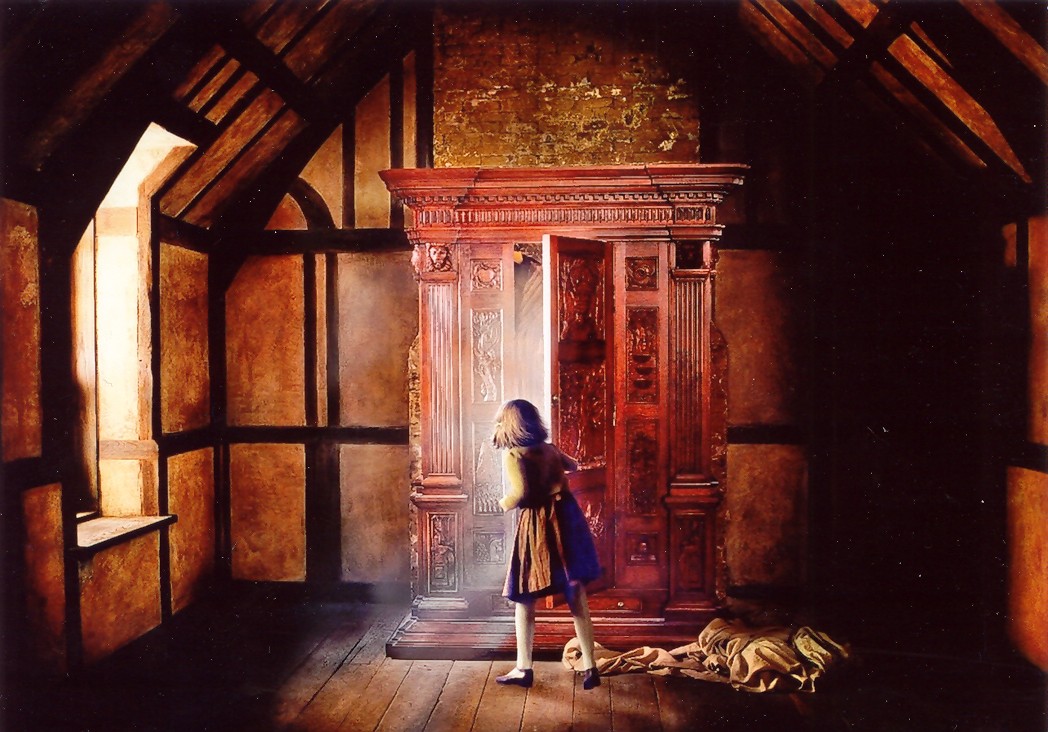
We were reading in Anne of Ingleside the other night. Some kids were tormenting little Walter: "Your mother is going to die. But that's okay because you'll see her in heaven." "How far away is heaven?" trembles Walter. "Oh, millions and millions of miles away."

Jesus' flesh and blood are in the chancel. "Lord of lords, in human vesture, in the body and the blood, He will give to all the faithful His own self for heavenly food."
The angels and archangels, the apostles and prophets, the martyrs and the blessed dead -- they're in church with us. "Rank on rank the hosts of heaven spreads its vanguard on the way as the Light of Light descendeth from the realms of endless day -- comes the powers of hell to vanquish, as the darkness clears away."
The Tardis is bigger on the inside.
But it's just a story.
The wardrobe is bigger on the inside.
But it too is just a story.
The chancel is bigger on the inside.
More crowded than we realize.
But it's not just-a-story.
That doorway into the nave? It's a portal to where heaven and earth intersect.
What happens there is realer than any Reality we experience on earth.
And it's not millions and millions of miles away.
Jesus comes TO US.
Saturday, June 28, 2014
"Going to Church"
When I was little, we went to "church." "Going to church" meant Sunday morning or maybe a Wednesday-evening Lenten service. It didn't mean dropping by the building to pick up the sweater you left there yesterday.
In recent years, friends talk about going to "Divine Service" or to "worship" or to "Mass" or to "prayers" or even to "celebration service."
[that moment when the light bulb clicks on]
Augsburg Confession, Article 7: The holy Christian church is
If you look at it that way, "going to church" doesn't sound any different from "Divine Service"!
In recent years, friends talk about going to "Divine Service" or to "worship" or to "Mass" or to "prayers" or even to "celebration service."
[that moment when the light bulb clicks on]
Augsburg Confession, Article 7: The holy Christian church is
the assembly of all believers among whom the Gospel is preached in its purity and the holy sacraments are administered according to the Gospel.
If you look at it that way, "going to church" doesn't sound any different from "Divine Service"!
Thursday, April 17, 2014
Holy Week Liturgy
Extra services.
Pastors have many sermons to prepare.
Some pastors have services to write too. In congregations that don't use the liturgy, each week's service has to be invented afresh. During Holy Week, that would be a lot of [unnecessary] work.
Some of us laymen yearn for Holy Week to come so that we can hear the same thing we heard last year. And the year before. And the year before. The same liturgy. The same hymns. The same readings. If you're reading the book, the same rites and pericopes don't get stale, even if they've been used for hundreds of years ... because those words are the life of the world.
Pastors have many sermons to prepare.
Some pastors have services to write too. In congregations that don't use the liturgy, each week's service has to be invented afresh. During Holy Week, that would be a lot of [unnecessary] work.
Some of us laymen yearn for Holy Week to come so that we can hear the same thing we heard last year. And the year before. And the year before. The same liturgy. The same hymns. The same readings. If you're reading the book, the same rites and pericopes don't get stale, even if they've been used for hundreds of years ... because those words are the life of the world.
Wednesday, April 02, 2014
Reading the Blessing
Maybe the young, new pastor is shy and thus unsure of himself.
Maybe the pastor had been immersed in "contemporary worship" and is now discovering the blessings of the liturgy, although he's not yet grounded in the pattern of those words.
Maybe the pastor is having health problems so that his memory (or speech) is uncharacteristically jumbled.
There are times when it's important that the book be opened and be read, so that the words are right. Obviously, nobody is expecting the pastor to go through the entire service, including the Prayer of the Church, including all the seasonal variations in the preface and the collects, with all of it memorized. It's important to read the book.
But aren't there sections that we learn by heart? "The Lord bless you and keep you. The Lord make His face shine upon you, and be gracious unto you. The Lord lift up His countenance upon you, and give you peace." Isn't that something we hear often enough that we learn it without even trying to memorize it? It always surprises me when I see an experienced pastor looking at the book instead of at the people as he blesses them.
But, hey, definitely better to be reading it
than to be making up your own thing!
Friday, November 15, 2013
Hold the Traditions
After Paul talks about the falling away of many in the church, he says, "God from the beginning chose you for salvation through sanctification by the Spirit and belief in the truth, to which He called you by our gospel, for the obtaining of the glory of our Lord Jesus Christ. Therefore, brethren, stand fast and hold the traditions which you were taught, whether by word or our epistle" (2 Thessalonian 2).
Through the Church, the Holy Spirit gave the catechism. And the divine service with the liturgy. And solid, Christ-centered hymns preaching the forgiveness of sins. And the sacraments. And ministers to speak on behalf of Jesus to us.
Do we fiercely hang onto it, as if our lives depended on it? (For of course, they do.) Or do we hold cheap the traditions we were taught?
When the Israelites were leaving Egypt, Moses said, "Stand still and see the salvation which the Lord shall accomplish for you this day.... The Lord will fight for you, and you shall hold your peace."
Through the Church, the Holy Spirit gave the catechism. And the divine service with the liturgy. And solid, Christ-centered hymns preaching the forgiveness of sins. And the sacraments. And ministers to speak on behalf of Jesus to us.
Do we fiercely hang onto it, as if our lives depended on it? (For of course, they do.) Or do we hold cheap the traditions we were taught?
When the Israelites were leaving Egypt, Moses said, "Stand still and see the salvation which the Lord shall accomplish for you this day.... The Lord will fight for you, and you shall hold your peace."
Thursday, July 04, 2013
Skits in Church
So I don't like skits during church. But is that just my preference, whereas somebody else has a different preference?
I figured it out. It's not just me and my old-fashioned hang-ups.
 Skits are pretending.
They're not real. People are acting. Actors pretend to be who they're not. They say lines written for them instead of engaging in real-life, from-the-heart conversation.
What happens during church must be REAL. It must be true and honest and live dialogue between God and man.
No show.
No pretend.
Genuine speech. Speech that accomplishes a transaction.
I figured it out. It's not just me and my old-fashioned hang-ups.

They're not real. People are acting. Actors pretend to be who they're not. They say lines written for them instead of engaging in real-life, from-the-heart conversation.
What happens during church must be REAL. It must be true and honest and live dialogue between God and man.
No show.
No pretend.
Genuine speech. Speech that accomplishes a transaction.
Saturday, June 29, 2013
Mnemonic Device for the Gospel Responses
"Praise to You, O Lord"?
"Glory be to Thee, O .... Christ??? Lord??? What IS the word?"
When I was little, I could never keep it straight. And I've noticed there are lots of people who have the same problem.
The S goes in the same response. "Praise" goes with "Christ."
Praise be to Thee, O Christ.
The OR goes in the same response. "Glory" goes with "Lord."
Glory to You, O Lord.
"Glory be to Thee, O .... Christ??? Lord??? What IS the word?"
When I was little, I could never keep it straight. And I've noticed there are lots of people who have the same problem.
The S goes in the same response. "Praise" goes with "Christ."
Praise be to Thee, O Christ.
The OR goes in the same response. "Glory" goes with "Lord."
Glory to You, O Lord.
Tuesday, June 18, 2013
Where Does Preaching Belong?
In the Lutheran church, preaching comes after the Bible readings and before the Lord's Supper. We visited a church once where the Lord's Supper comes first, with preaching afterward. What difference does it make?
If preaching is about converting sinners (over and over and over again), then it belongs prior to the Supper. I am called to repentance for my sin; Jesus' mercy is lavished upon me; this makes me able to receive His body rightly.
But if the Holy Communion comes first and then preaching, that's because they believe the Supper is to give you the power, the oomph, the motivation, to be Jesus' follower. And the point of the sermon is to instruct you in your behavior.
So the difference is whether the sermon is seen as comfort or guidance.
And that ultimately indicates whether we trust in the law or the gospel.
If preaching is about converting sinners (over and over and over again), then it belongs prior to the Supper. I am called to repentance for my sin; Jesus' mercy is lavished upon me; this makes me able to receive His body rightly.
But if the Holy Communion comes first and then preaching, that's because they believe the Supper is to give you the power, the oomph, the motivation, to be Jesus' follower. And the point of the sermon is to instruct you in your behavior.
So the difference is whether the sermon is seen as comfort or guidance.
And that ultimately indicates whether we trust in the law or the gospel.
Tuesday, June 04, 2013
Supperless Sunday
"This is the feast of victory for our God ..."
WHAT is the feast?
Why are we singing this when the feast is not offered?
"I will take the cup of salvation ...."
But the chalice isn't on the altar today.
"I will pay my vows to the Lord now
in the presence of all His people,
in the courts of the Lord's house,
in the midst of you, o Jerusalem."
I'm still pondering this: IS the chancel heaven-on-earth when the Lord's Supper is not being celebrated? When we're in church for prayers and preaching, are the saints and angels in heaven joined with us in the same way that they are joined with us for the Holy Communion?
I like Matins and Vespers and Evening Prayer.
If there's no Supper, the prayer offices are good.
So why pray the liturgy that goes with the Supper and then not celebrate the Supper?
WHAT is the feast?
Why are we singing this when the feast is not offered?
"I will take the cup of salvation ...."
But the chalice isn't on the altar today.
"I will pay my vows to the Lord now
in the presence of all His people,
in the courts of the Lord's house,
in the midst of you, o Jerusalem."
I'm still pondering this: IS the chancel heaven-on-earth when the Lord's Supper is not being celebrated? When we're in church for prayers and preaching, are the saints and angels in heaven joined with us in the same way that they are joined with us for the Holy Communion?
I like Matins and Vespers and Evening Prayer.
If there's no Supper, the prayer offices are good.
So why pray the liturgy that goes with the Supper and then not celebrate the Supper?
Wednesday, May 22, 2013
Huh? What Are YOU Talking About?
We were both baffled.
Expectations and assumptions -- they sure do affect communication.
A very sweet Methodist co-worker (a mom of soldiers) cheerily asked today if our church service on Sunday would be in celebration of soldiers.
I can't imagine how confused my face must have looked. "Sunday?? Soldiers?? Uh, we'll be celebrating the Feast of the Holy Trinity."
Then it was her turn to be confused. It's Memorial Day weekend. Why wouldn't we be honoring the soldiers? She wasn't negative, she certainly didn't accuse or anything, but she seemed bewildered by my answer.
"Last Sunday was Pentecost. This Sunday is Trinity. It's a high feast of the Church." My statements sounded more like questions because I thought these things went without saying.
And then a customer arrived and the conversation was cut short, as so often happens.
I'm such a misfit.
Expectations and assumptions -- they sure do affect communication.
A very sweet Methodist co-worker (a mom of soldiers) cheerily asked today if our church service on Sunday would be in celebration of soldiers.
I can't imagine how confused my face must have looked. "Sunday?? Soldiers?? Uh, we'll be celebrating the Feast of the Holy Trinity."
Then it was her turn to be confused. It's Memorial Day weekend. Why wouldn't we be honoring the soldiers? She wasn't negative, she certainly didn't accuse or anything, but she seemed bewildered by my answer.
"Last Sunday was Pentecost. This Sunday is Trinity. It's a high feast of the Church." My statements sounded more like questions because I thought these things went without saying.
And then a customer arrived and the conversation was cut short, as so often happens.
I'm such a misfit.
Thursday, April 25, 2013
Liturgy as Teacher
How does a pastor know what to say when he's teaching somebody?
I've seen my pastor do it in numerous contexts: teaching from the liturgy. Somebody is getting married? My kids tell me he went through the vows and the wedding rite, talking about what it means, what it teaches, what it shows, what God does in that rite. Or maybe a young pastor wants to know how to be a pastor, what to do. So Pastor uses the ordination vows as a guideline to discuss the work of a pastor. Or maybe people have questions about death. He may start discussing the funeral rites.
I like that. Not only does the liturgy tell us what we need to know when we're asking, but it also means that every time you're there again (a baptism, a wedding, a first communion, etc) you've got all that fleshed-out and expanded-upon discussion to illuminate what God is doing & saying in those rites.
I've seen my pastor do it in numerous contexts: teaching from the liturgy. Somebody is getting married? My kids tell me he went through the vows and the wedding rite, talking about what it means, what it teaches, what it shows, what God does in that rite. Or maybe a young pastor wants to know how to be a pastor, what to do. So Pastor uses the ordination vows as a guideline to discuss the work of a pastor. Or maybe people have questions about death. He may start discussing the funeral rites.
I like that. Not only does the liturgy tell us what we need to know when we're asking, but it also means that every time you're there again (a baptism, a wedding, a first communion, etc) you've got all that fleshed-out and expanded-upon discussion to illuminate what God is doing & saying in those rites.
Tuesday, April 23, 2013
Holy Gho... Spiri.... Ghos.... Spirit!
Andrew has scolded me for saying "In the name of the Father and of the Son and of the Holy Ghost" at the start of prayers. "Mommmmm, how long is it going to take for you to quit doing that?!"
Last week Maggie was distracted when she said "Holy Ghost" to match what she expected to be my mistake, but I got it right and said "Spirit." So we clashed anyway.
So I busted a gut when David Scaer (who has a bit of the same problem) mentioned what his pastor told him:
"The Holy Ghost is scary."
Oh, bad puns. How I love them!
Last week Maggie was distracted when she said "Holy Ghost" to match what she expected to be my mistake, but I got it right and said "Spirit." So we clashed anyway.
So I busted a gut when David Scaer (who has a bit of the same problem) mentioned what his pastor told him:
"The Holy Ghost is scary."
Oh, bad puns. How I love them!
Friday, December 14, 2012
A Beautiful Synod, Warts and All
It would be cool if Pastor Esget were more a friend than a friendly acquaintance to me. I have thoroughly enjoyed the brief times I've had opportunity to spend with him. I love reading what he writes and the rare chances to listen when he speaks. He's been on sabbatical recently, and he wrote about his visits to different congregations, in particular an Orthodox church and a mega-church.
He said of the sermon at the Orthodox church: "With only the slightest alterations, the sermon could have been heard in any Baptist or Methodist church."
He summarized his visits to the two congregations thusly: "I was in awe of the organization, money, screens, facilities, and volunteer power at McLean Bible Church. I was filled with joy by the beautiful choir, chants, incense, icons, and sense of culture at St. Nicholas. But in neither place did I hear a single word of Gospel preached."
And he reflected on the experience: "I wouldn’t trade Lutheranism in general or Immanuel in particular—despite all the problems which it would take volumes to list—for the treasures of those places. The Word of God lives at St. Nicholas on account of the liturgy. I trust that the people at MBC are, to some extent, reading the Scriptures. But one of the things this sabbatical reenforced for me is how wonderful it is to be part of the Missouri Synod, where for all her hideous warts and defects the Gospel still is preached."
Amen.
And thank You, Jesus.
He said of the sermon at the Orthodox church: "With only the slightest alterations, the sermon could have been heard in any Baptist or Methodist church."
He summarized his visits to the two congregations thusly: "I was in awe of the organization, money, screens, facilities, and volunteer power at McLean Bible Church. I was filled with joy by the beautiful choir, chants, incense, icons, and sense of culture at St. Nicholas. But in neither place did I hear a single word of Gospel preached."
And he reflected on the experience: "I wouldn’t trade Lutheranism in general or Immanuel in particular—despite all the problems which it would take volumes to list—for the treasures of those places. The Word of God lives at St. Nicholas on account of the liturgy. I trust that the people at MBC are, to some extent, reading the Scriptures. But one of the things this sabbatical reenforced for me is how wonderful it is to be part of the Missouri Synod, where for all her hideous warts and defects the Gospel still is preached."
Amen.
And thank You, Jesus.
Thursday, May 24, 2012
This Is Serious Stuff
So, is fussiness a bad thing? I've often noticed the particular care my pastor takes with the items on the altar after communion. He sets the vessels in just the right place. He makes sure the veil is neat and straight and the corners are folded just so.
Some people might find that to be too picky. But it sends a message (although I'm pretty sure that's not why he does it). It sends a message that these things matter. That this is serious stuff. That this is not to be rushed through. That something precious and important is happening here.
An article in Touchstone (hat tip: Rick Stuckwisch) illustrated the difference between the pastor and the soldiers at a military funeral. The pastor was a little casual. The soldiers were precise in executing their military rites.
At the late service on Good Friday, the final distribution hymn ended a big fat minute or two (or three?) before Pastor was done at the altar. Silence. We waited. We watched. The silence continued. He was taking his usual pains with making sure everything was just so. More silence.
Earlier in the evening, we'd heard the Passion According to St John. At the very end of the story, Joseph of Arimathea and Nicodemus wrapped Jesus' body in linen and laid Him in the tomb. And there was Pastor, ever-so-carefully draping the linen over the vessels where Jesus' body and blood had been minutes before.
I was not the only one who had to brush away a tear.
Did it matter? Would Jesus have been any less there, any less forgiving, had Pastor been hastier and more casual? No.
But it still matters.
The careful attention-to-detail confesses something about what's happening there, in that place, at that time, through that bread and that wine. It confesses something about what that bread and wine IS.
And what do we confess when we hurry through and are okay with sloppiness?
Some people might find that to be too picky. But it sends a message (although I'm pretty sure that's not why he does it). It sends a message that these things matter. That this is serious stuff. That this is not to be rushed through. That something precious and important is happening here.
An article in Touchstone (hat tip: Rick Stuckwisch) illustrated the difference between the pastor and the soldiers at a military funeral. The pastor was a little casual. The soldiers were precise in executing their military rites.
At the late service on Good Friday, the final distribution hymn ended a big fat minute or two (or three?) before Pastor was done at the altar. Silence. We waited. We watched. The silence continued. He was taking his usual pains with making sure everything was just so. More silence.
Earlier in the evening, we'd heard the Passion According to St John. At the very end of the story, Joseph of Arimathea and Nicodemus wrapped Jesus' body in linen and laid Him in the tomb. And there was Pastor, ever-so-carefully draping the linen over the vessels where Jesus' body and blood had been minutes before.
I was not the only one who had to brush away a tear.
Did it matter? Would Jesus have been any less there, any less forgiving, had Pastor been hastier and more casual? No.
But it still matters.
The careful attention-to-detail confesses something about what's happening there, in that place, at that time, through that bread and that wine. It confesses something about what that bread and wine IS.
And what do we confess when we hurry through and are okay with sloppiness?
Subscribe to:
Posts (Atom)